Needle, Thread, and Revolution: The Seamstress Who Stitched Together a Movement's Identity
The Hands That Held the Thread
In the cramped back room of a Philadelphia dress shop in 1912, Mary Burnham bent over her sewing machine, stitching yet another evening gown for a client who would never think to ask her opinion on anything more significant than hem length. Outside, suffragists marched through the streets demanding the right to vote. Inside, Burnham worked in the shadows, invisible as wallpaper.
 Photo: Mary Burnham, via s3.amazonaws.com
But Mary Burnham was about to change everything — one stitch at a time.
A Life Measured in Inches
Burnham had spent fifteen years as a professional seamstress, her world defined by measuring tapes and pin cushions. She worked six days a week, ten hours a day, creating beautiful clothes for women who lived the kinds of lives she could only imagine. Her clients discussed politics, literature, and social causes while she knelt at their feet, marking hemlines and adjusting waistbands.
She listened to everything. Said nothing. And quietly seethed.
The irony wasn't lost on her: she spent her days making women beautiful for a world that refused to take them seriously. Every dress she completed was a costume for a performance in a play where women were never allowed to speak their own lines.
When Silence Becomes Action
The turning point came during a fitting for Mrs. Elizabeth Hartwell, wife of a prominent banker who was vocal in his opposition to women's suffrage. As Burnham adjusted the sleeves on an elaborate dinner dress, Mrs. Hartwell complained about the "dreadful suffragettes" disrupting the peace with their "unseemly demands."
"Women voting," Mrs. Hartwell sniffed, "is simply against nature. We have our sphere, and they have theirs."
Burnham's needle paused. For fifteen years, she had absorbed such comments without response. But that evening, as she walked home through streets where suffragists had marched just hours before, she made a decision that would reshape American history.
If she couldn't speak, she would sew.
The Banner That Changed Everything
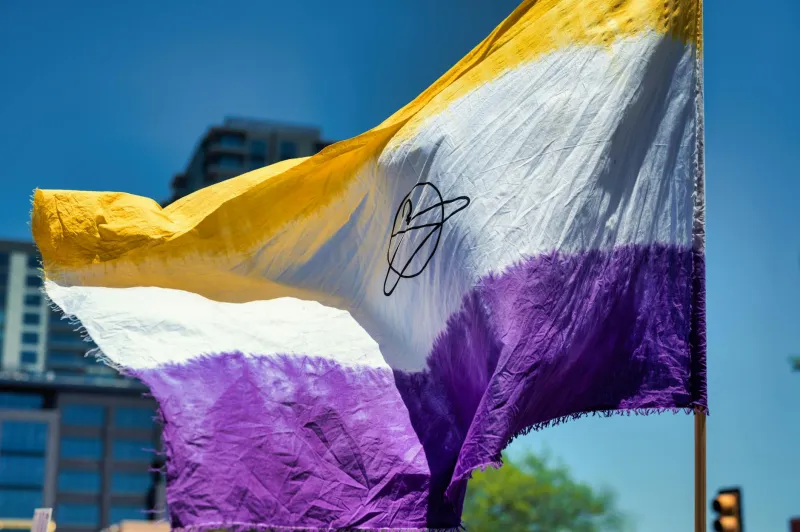
Working by lamplight in her tiny apartment, Burnham began creating something the suffrage movement had never had: a visual identity that could unite women across class, education, and regional divides. She chose purple for dignity, white for purity of purpose, and gold for the hope of equality.
But this wasn't just another flag. Burnham understood something the movement's educated leaders had missed: symbols speak to people who can't read speeches, who can't attend rallies, who work too many hours for too little pay to engage in political discourse.
Her design was simple enough to reproduce in any sewing circle, elegant enough to carry in Fifth Avenue parades, and powerful enough to be recognized from blocks away. She created not just a banner, but a visual language for a movement that had been struggling to find its voice.
From Basement to Battlefield
Burnham's first flag appeared at a suffrage rally in Philadelphia's Independence Square in November 1912. She had sewn it in secret, working by candlelight to avoid detection by her disapproving landlord. When suffragist leader Alice Paul saw the banner unfurling in the crowd, she immediately understood its power.
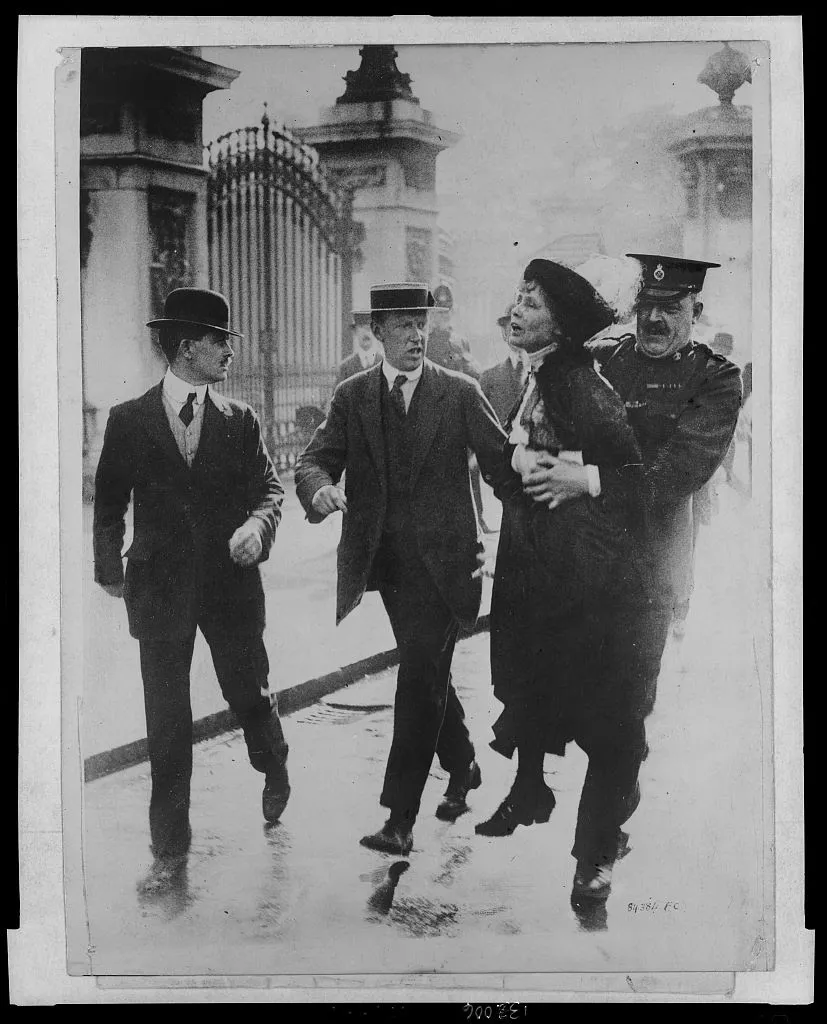 Photo: Alice Paul, via www.alicepaul.org
"Who made this?" Paul demanded.
When organizers pointed to the small, nervous seamstress standing at the crowd's edge, Paul pushed through the throng and grasped Burnham's hands.
"You've given us exactly what we needed," Paul said. "Will you make more?"
The Underground Network
What followed was one of the most remarkable grassroots manufacturing efforts in American political history. Burnham organized a secret network of seamstresses, factory workers, and domestic servants who spent their evenings reproducing her design. They met in church basements, kitchen tables, and boarding house parlors, turning fabric into revolution.
The women worked without pay, often using their own materials. They were housekeepers who stitched during their employers' dinner parties, factory workers who sewed by gaslight after twelve-hour shifts, and immigrant women who barely spoke English but understood the universal language of inequality.
Within six months, Burnham's design was appearing at suffrage rallies from Seattle to Savannah. The banner had become bigger than its creator, spreading through networks of women who had spent their lives being overlooked and underestimated.
The Victory She Never Saw
Mary Burnham died in 1918, just two years before the 19th Amendment granted American women the right to vote. She never lived to cast a ballot, never saw the movement she had helped visualize achieve its ultimate goal.
But on August 26, 1920, when women across America entered polling booths for the first time, many wore small pins featuring Burnham's purple, white, and gold design. The seamstress who had spent her life taking orders had helped millions of women finally give them.
The Thread That Binds
Burnham's story reminds us that history's most powerful moments often begin in the most ordinary places. While suffrage leaders gave speeches and organized rallies, a working-class seamstress was quietly creating the movement's most enduring symbol.
She understood something that political strategists often miss: change doesn't just need arguments — it needs identity. People don't just join movements; they see themselves in them. And sometimes, the person who helps them see most clearly is the one who has spent her life being invisible.
Today, when we see protesters carrying banners and wearing symbolic colors, we're witnessing the legacy of a Philadelphia seamstress who proved that the most powerful revolutions can begin with a needle, thread, and the quiet determination of someone who has spent too long being told to sit down and be quiet.
Mary Burnham never got to vote, but she gave millions of women something equally important: a flag to carry into battle, and the knowledge that even the most invisible hands can stitch together the fabric of change.