From Card Table to City Hall: The Lunch Lady Who Ate Her Way to Political Power
The Federal Building's Best-Kept Secret
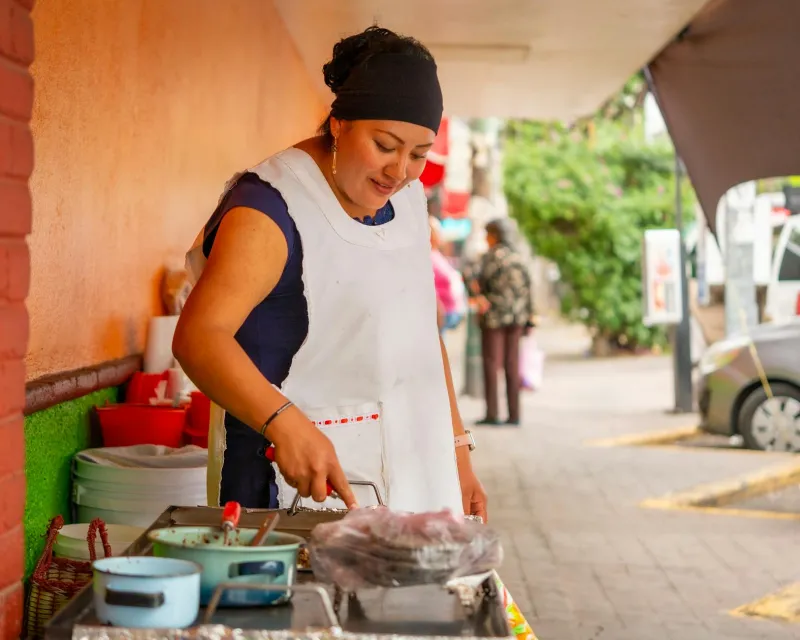
Every morning at 6:45 AM, Rosa Martinez would unfold a card table on the sidewalk outside the John H. Wood Jr. Federal Courthouse in San Antonio, Texas. Her setup was modest: a red cooler filled with homemade tamales, a thermos of coffee that could wake the dead, and a hand-lettered sign advertising "Rosa's Real Food" in both English and Spanish. To passing tourists, she looked like just another street vendor. To the judges, attorneys, clerks, and federal workers streaming into the building, she was an institution.
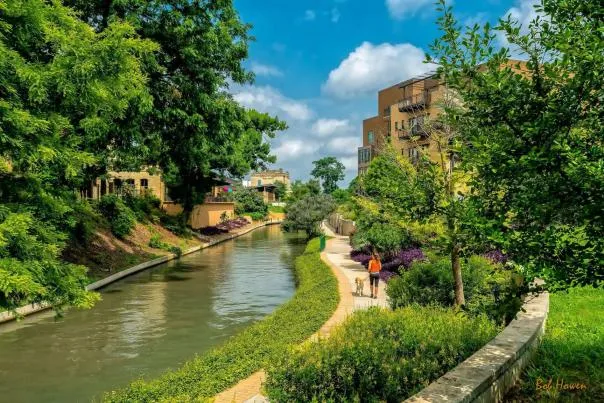 Photo: San Antonio, via assets.simpleviewinc.com
 Photo: John H. Wood Jr. Federal Courthouse, via i2.wp.com
What started in 1987 as a desperate attempt to feed her family after her husband's construction injury became something much more powerful: a daily masterclass in retail politics that would eventually carry Rosa from the sidewalk to the mayor's office.
Building an Empire One Breakfast at a Time
Rosa's business model was deceptively simple. She learned every customer's name, remembered their usual order, and made sure their food was ready exactly when they needed it. Judge Morrison liked his coffee black with two sugars, no conversation before 9 AM. Assistant District Attorney Jennifer Walsh always ordered extra salsa verde and paid for the breakfast of whoever was behind her in line. Court reporter Mike Gonzalez needed his breakfast burrito wrapped in foil because he ate it during testimony breaks.
"Rosa knew more about the personal lives of federal employees than the FBI," jokes Walsh, now a private attorney. "She knew who was getting divorced, who was struggling with sick kids, who was up for promotion. And she never, ever forgot a birthday."
Within five years, Rosa's card table operation had evolved into something resembling a diplomatic embassy. Federal workers would stop by not just for breakfast, but to vent about bureaucratic frustrations, seek advice about office politics, and get Rosa's take on everything from parking disputes to policy changes. She became an unofficial ombudsman for the entire federal building.
The Education of a Natural Politician
Rosa's real education in governance came from listening to her customers complain. Every morning brought fresh grievances about city services: broken streetlights that hadn't been fixed for months, permit processes that made no sense, neighborhood crime that police seemed to ignore. Rosa started keeping a notebook, writing down problems and tracking which ones got solved and which ones disappeared into bureaucratic limbo.
"She understood how the city actually worked because she heard from people who dealt with it every day," explains Dr. Maria Santos, a political science professor at UT San Antonio who studied Rosa's rise. "Most politicians learn about governance from law books and campaign consultants. Rosa learned it from the people who had to live with the consequences."
 Photo: UT San Antonio, via d28htnjz2elwuj.cloudfront.net
Rosa's breakthrough insight was realizing that many city problems weren't caused by lack of resources or political will—they were caused by departments that didn't talk to each other. The street that flooded every summer wasn't getting fixed because Parks and Recreation thought it was Public Works' responsibility, while Public Works assumed it was a drainage issue that fell under the Water Department.
From Vendor to Voice
Rosa's transition from sidewalk entrepreneur to political candidate began almost by accident. In 1995, the city proposed new regulations that would have banned food vendors within 500 feet of federal buildings. The rule was ostensibly about security, but everyone knew it was really about downtown business owners who resented competition from street vendors.
Instead of fighting the regulation through lawyers or protests, Rosa did something more strategic: she invited every city council member to lunch at her table. Not a formal meeting or campaign event—just lunch. She served them the same food her regular customers ate, told them the same stories about neighborhood problems she heard every morning, and let them see firsthand how her business actually worked.
"She didn't argue with us about the regulation," recalls former councilman David Rodriguez. "She just showed us what we'd be losing. By the end of lunch, we weren't thinking about her as a vendor who needed to be regulated. We were thinking about her as a constituent who understood the city better than we did."
The vendor regulation was quietly shelved. More importantly, Rosa had discovered her political superpower: the ability to make complex policy discussions feel like conversations over coffee.
The Campaign That Ran Itself
When Rosa announced her candidacy for city council in 1999, political insiders dismissed her as a well-meaning amateur who didn't understand how campaigns worked. They were right about the amateur part—Rosa had never run for office, never managed a political campaign, never given a formal speech. What they missed was that she'd been campaigning for twelve years without realizing it.
Her customer base became her volunteer network. Federal employees who had eaten her breakfast burritos for a decade became her precinct captains. The notebook where she'd tracked city problems became her policy platform. The relationships she'd built one conversation at a time became an electoral coalition that crossed every demographic line in San Antonio.
"Traditional campaigns spend millions of dollars trying to create the kind of name recognition and voter trust that Rosa already had," explains campaign consultant Angela Reyes, who worked on several opposing campaigns that year. "She didn't need to introduce herself to voters. She'd been feeding them for over a decade."
The Mayor Who Still Remembered Your Order
Rosa won her council seat with 67% of the vote, the largest margin in her district's history. Six years later, she was elected mayor in a landslide that surprised everyone except the people who had watched her solve problems one breakfast at a time.
As mayor, Rosa's management style was exactly what you'd expect from someone who had run a successful food service operation: obsessive attention to customer satisfaction, zero tolerance for inefficiency, and an almost supernatural ability to remember details about individual constituents' problems.
"She ran the city the same way she ran her business," says former city manager Robert Silva. "Every department head knew that Rosa would ask specific questions about specific cases, and she'd remember their answers three months later. You couldn't bullshit her because she'd already heard about the problem from the people who were actually affected by it."
Rosa served two terms as mayor, from 2005 to 2013. During her tenure, San Antonio's response time to citizen complaints improved dramatically, interdepartmental coordination increased, and voter turnout in municipal elections reached historic highs. Political scientists attributed her success to everything from demographic changes to economic trends, but Rosa's explanation was simpler: "I just kept doing what I'd always done—listening to people and trying to solve their problems."
The Table That Built a Career
Rosa retired from politics in 2013 and, briefly, returned to her card table outside the federal building. But the city had changed, her customers had moved on, and she'd changed too. After six months, she folded up the table for the last time.
"I started with a card table because I needed to feed my family," Rosa reflected during her farewell speech as mayor. "I ended up in this office because I learned that feeding people and serving people aren't really that different. Both require you to pay attention to what people actually need, not what you think they should want."
Today, Rosa works as a consultant for municipal governments across Texas, teaching city officials how to improve citizen engagement and interdepartmental cooperation. Her methods are unconventional but effective: she encourages mayors to spend time in neighborhoods, city managers to track individual complaint resolution, and department heads to actually talk to the people affected by their policies.
"Rosa proved that the best political education happens outside of politics," concludes Dr. Santos. "She understood governance because she understood service. And she understood service because she'd been serving people, one meal at a time, for twenty years."
The card table that started Rosa's journey is now displayed in the San Antonio City Hall lobby, a reminder that sometimes the most unlikely paths lead to the most important destinations. Every morning, city employees walk past it on their way to work, carrying coffee and breakfast from the food trucks that now line the streets Rosa once claimed with nothing but determination and a good breakfast burrito.