Words Found Late: The Cleaning Lady Who Discovered Her Voice and Silenced Broadway

The Observer in Plain Sight
Rose Williams had cleaned offices in Chicago's Loop for over two decades when she first walked into Lorraine Hansberry's cramped apartment above a South Side beauty shop. It was 1957, and Williams was forty-one years old. She had raised three children, survived the Depression, and watched the city change from streetcars to buses to the early rumblings of urban renewal. What she hadn't done was learn to read.
 Photo: Chicago's Loop, via cdn.choosechicago.com
 Photo: Lorraine Hansberry, via 19thnews.org
Not that anyone would have known. Williams had developed an intricate system of navigating a text-based world without literacy—memorizing bus routes by landmarks, recognizing products by their packaging, and most importantly, watching people. Really watching them.
"I cleaned for writers, lawyers, doctors, all kinds of folks," Williams would later recall. "I seen how they lived when they thought nobody was looking. I seen their real selves, not the ones they put on for company."
The Accidental Education
Hansberry, the young playwright working on what would become "A Raisin in the Sun," noticed something unusual about her cleaning lady. Williams would linger near the typewriter, not to dust it, but to stare at the pages scattered around it. She asked questions that showed a sophisticated understanding of human nature, even if she couldn't read the words that captured it.
"Rose understood my characters better than some directors I worked with," Hansberry later wrote. "She'd ask me why Walter Lee was so angry, or what made Ruth so tired. She saw the truth in people that I was trying to put on paper."
It was Hansberry who finally asked the question that changed everything: "Rose, would you like to learn to read?"
The Late Bloomer's Classroom
At forty-two, Williams enrolled in a literacy program at the local community center. Her teacher, expecting to work with someone starting from scratch, was amazed to discover that Williams already understood narrative structure, character development, and dialogue—she just couldn't decode the symbols on the page.
"It was like she had been absorbing stories her whole life," her teacher remembered. "Once she learned to read, it wasn't like teaching literacy. It was like unlocking a library that was already built."
Williams devoured everything: newspapers, magazines, novels, plays. But it was the plays that grabbed her hardest. "I realized that all those conversations I'd been overhearing, all those people I'd been watching—that was theater," she said. "I'd been studying it for forty years without knowing it."
The Story That Had Been Waiting
Within six months of learning to read, Williams had filled three notebooks with observations, character sketches, and dialogue. The material wasn't invented—it was remembered. Decades of cleaning homes, watching families, and overhearing conversations had given her a vast archive of human behavior.
Her breakthrough came when she started writing about something she knew intimately: the experience of being invisible in plain sight. The domestic workers, janitors, and service employees who moved through affluent spaces while remaining essentially unseen.
"I wrote about the woman who cleans the office where they're planning to fire her son," Williams explained. "About the maid who knows the family's secrets but can't say nothing. About people who see everything but supposed to pretend they blind."
"The Invisible Hour"
Williams' play, "The Invisible Hour," told the story of domestic workers in a wealthy Chicago neighborhood who discover they share more than just employers—they share knowledge. The play revealed how the invisible workforce of cleaners, nannies, and housekeepers formed their own communication network, passing information and observations between households.
The script was unlike anything being produced at the time. While most plays about domestic workers portrayed them as either noble sufferers or comic relief, Williams wrote them as complex individuals with rich inner lives and sharp social awareness.
"She wrote us like we were real people," said actress Ruby Dee, who starred in the original production. "Not symbols, not stereotypes. Real people with real thoughts and real power, even when the world pretended we were invisible."
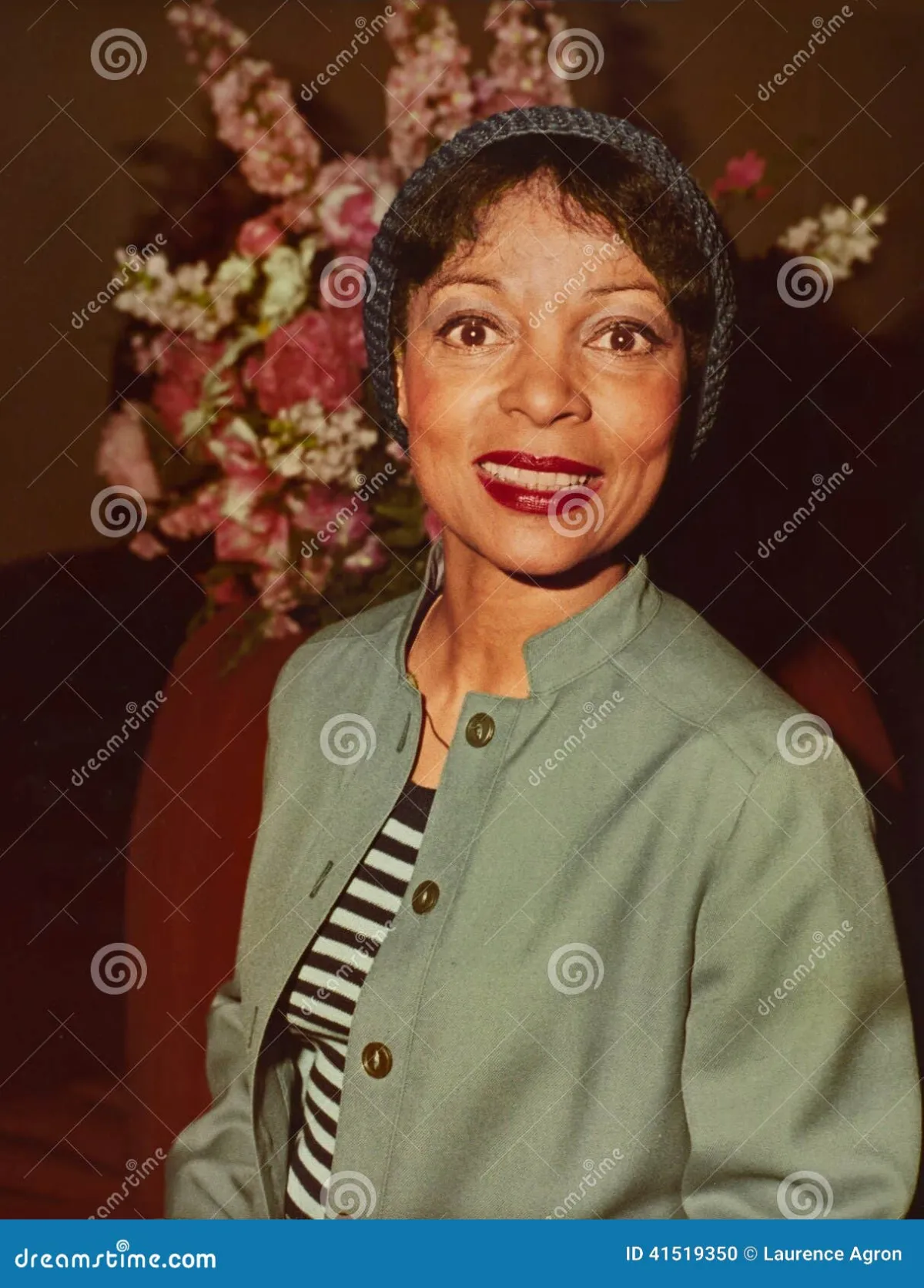 Photo: Ruby Dee, via thumbs.dreamstime.com
Broadway's Uncomfortable Mirror
When "The Invisible Hour" opened off-Broadway in 1962, it created an immediate sensation. Critics called it "devastatingly honest" and "uncomfortably revealing." The play ran for 847 performances and won Williams a Tony Award for Best Play—making her the first African American cleaning lady to win Broadway's highest honor.
But the real impact was in how the play changed conversations about domestic work and class in America. Williams had used her late-arriving literacy to give voice to an entire population of workers who had been literally and figuratively voiceless in American theater.
"Rose didn't just learn to write," observed theater critic Brooks Atkinson. "She learned to translate a lifetime of observation into art. Most playwrights spend years learning to see what she had been seeing all along."
The Power of Delayed Discovery
Williams' story challenges our assumptions about education, timing, and creative development. Her forty-two years of illiteracy weren't lost time—they were research. Every house she cleaned, every conversation she overheard, every family dynamic she observed became material for her writing.
"If I had learned to read as a child, I might have spent my time reading other people's stories instead of collecting my own," Williams reflected. "Sometimes the best education is the one you don't know you're getting."
Her late literacy also gave her writing an urgency that younger playwrights often lacked. She knew she had stories to tell and limited time to tell them. There was no time for pretense or literary posturing—only for truth.
The Voice That Wouldn't Stay Silent
Williams went on to write six more plays, each drawing from her vast reservoir of human observation. She became a sought-after speaker about literacy, invisibility, and the power of untold stories. But she never stopped cleaning houses—not because she had to, but because that's where she found her material.
"People ask me why I still clean when I could afford to hire someone else," Williams said in a 1970 interview. "But that's where the stories are. In people's real lives, not in their public faces. I'm still researching, still learning, still watching."
Her final play, "Late Words," premiered on Broadway in 1978, fifteen years after she first learned to read. It was a meditation on timing, opportunity, and the stories that wait inside us until we're ready to tell them.
"Some voices need time to develop," Williams wrote in her memoir. "Some stories need to age before they're ready to be told. I wasn't late to literacy—literacy was right on time for me."
In a world that often assumes the best discoveries happen early, Rose Williams proved that some of the most powerful voices emerge from the most unexpected places, at the most surprising times. Her cleaning supplies may have made surfaces shine, but her words made America see itself more clearly.