From Log Cabins to the Oval Office: Seven Presidents Who Had No Business Making It
The Beautiful Mess of American Leadership
The American presidency has been occupied by Harvard graduates and Yale alumni, but some of its most transformative leaders started with circumstances that would make political consultants weep. These weren't the polished candidates with perfect resumes — they were the scrappy underdogs who somehow clawed their way to the most powerful office in the world.
Here are seven presidents whose early lives were so unlikely, their eventual rise seems almost impossible.
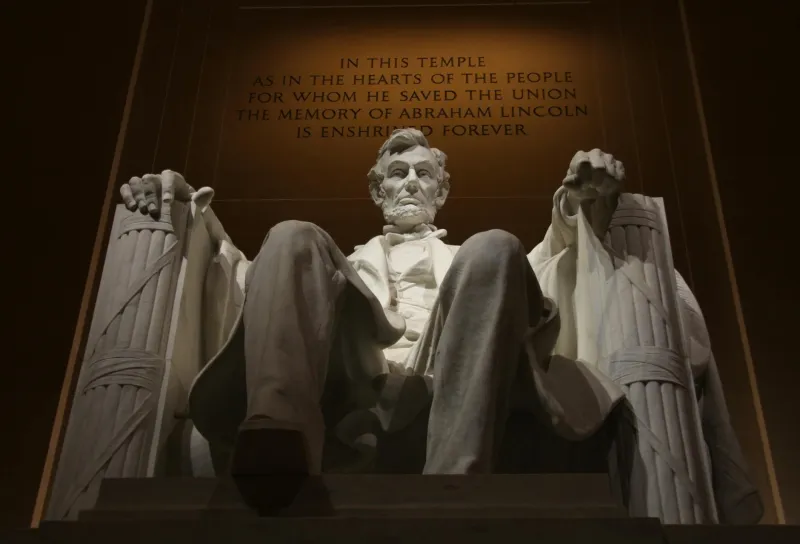
1. Abraham Lincoln: The Rail-Splitter Who Split a Nation to Save It
Born in a one-room log cabin in Kentucky, Lincoln grew up in a family so poor they moved constantly in search of better opportunities. His formal education totaled less than a year, but he taught himself to read using the Bible, Aesop's Fables, and any book he could borrow. Neighbors remembered seeing him reading by firelight, sometimes lying on his stomach in front of the hearth because it was the only source of light.
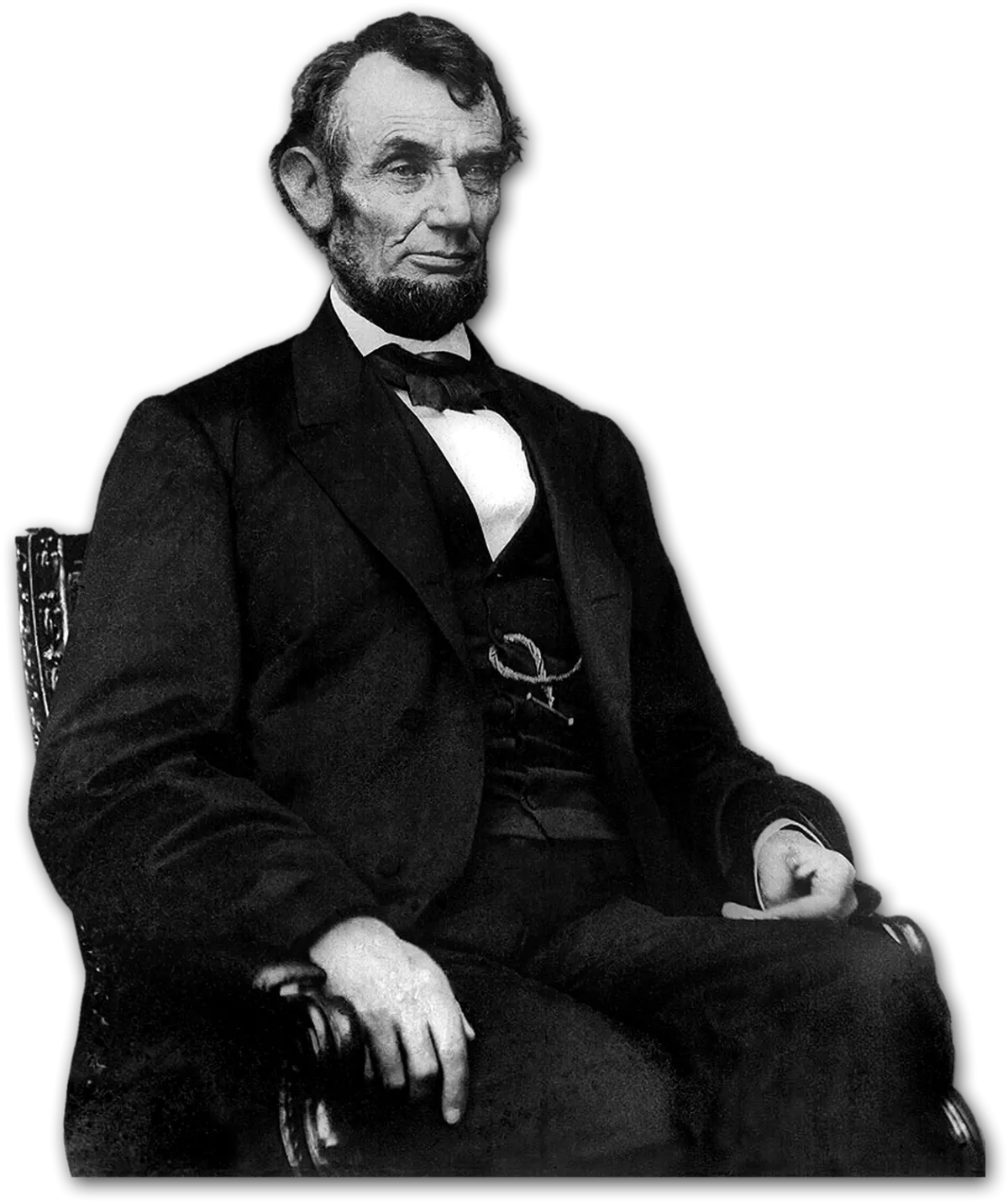 Photo: Abraham Lincoln, via pngimg.com
Lincoln split rails, plowed fields, and worked as a store clerk before studying law entirely on his own. When he first ran for the Illinois legislature, he finished eighth out of thirteen candidates. Political observers of his era described him as awkward, ungainly, and lacking the refined bearing expected of a statesman. Yet this self-taught frontier lawyer would guide America through its greatest crisis and reshape the nation's understanding of freedom.
2. Andrew Johnson: The President Who Learned to Read from His Wife
Johnson's path to the presidency started in the most unlikely place imaginable — complete illiteracy. Born into grinding poverty in North Carolina, he was apprenticed to a tailor at age 10 and never attended a day of school. At 18, he could barely write his own name.
Everything changed when he married Eliza McCardle, a shoemaker's daughter who had received a basic education. She taught him to read, write, and do arithmetic while he worked at his tailor shop. Johnson would practice writing letters while cutting cloth, and Eliza would read newspapers aloud while he sewed. This humble tailor shop became his university.
Johnson's rise through Tennessee politics was meteoric precisely because he understood working-class struggles in ways that educated politicians never could. He spoke their language because it was his language. Though his presidency was turbulent, his journey from illiterate apprentice to the White House remains one of America's most remarkable transformations.
3. Millard Fillmore: The Log Cabin Lawyer Who Almost Didn't Happen
Fillmore's childhood in upstate New York was so isolated that he didn't see a map until he was 19 years old. His family was so poor that his father apprenticed him to a cloth-maker to reduce the number of mouths to feed. The work was brutal, and Fillmore was essentially an indentured servant.
At 19, he bought his freedom from the apprenticeship for $30 and walked 100 miles to teach himself law. He had no money for law school, so he studied while working odd jobs, reading legal texts by candlelight in whatever room he could afford. His first legal reference book cost him two weeks' wages.
Fillmore failed his first bar exam but kept studying. He eventually built a successful law practice and entered politics, but always maintained the perspective of someone who had started with nothing. His rise from apprentice to president took 40 years of relentless self-improvement.
4. Andrew Jackson: The Orphan Who Fought Everyone
Jackson lost both parents before age 14 and grew up essentially raising himself on the Carolina frontier. At 13, he joined the Revolutionary War as a courier and was captured by British soldiers. When he refused to clean a British officer's boots, the officer slashed him with a sword, leaving permanent scars on his head and hand.
 Photo: Andrew Jackson, via cdn.testbook.com
After the war, Jackson was a wild teenager with no supervision, no money, and no prospects. He taught school briefly, studied some law, and gradually built a reputation as someone you didn't want to cross. His temper was legendary — he fought multiple duels and carried bullets in his body from various confrontations.
What made Jackson's presidency revolutionary wasn't his policies but his background. He was the first president who wasn't from Virginia or Massachusetts, the first who hadn't attended college, and the first who truly represented the frontier spirit that was reshaping America. His supporters saw him as one of them — someone who had fought for everything he'd achieved.
5. James Garfield: The Canal Boy Who Conquered Congress
Garfield's father died when James was two, leaving his mother to raise four children alone in an Ohio log cabin. At 16, Garfield was working on canal boats, guiding barges along the Ohio canals — dangerous work that killed many young men. He fell overboard 14 times in six weeks, nearly drowning each time.
But Garfield was determined to educate himself. He worked his way through Williams College, sometimes chopping wood to pay for textbooks. He taught school, preached at local churches, and studied law while serving in the Ohio legislature. His rise was powered by pure intellectual hunger and an unshakeable belief that education could transform anyone's circumstances.
Garfield became one of the most learned presidents in American history, fluent in Latin and Greek, capable of writing with both hands simultaneously in different languages. His journey from canal worker to classical scholar to president proved that in America, intellectual curiosity could overcome almost any disadvantage.
6. Richard Nixon: The Grocer's Son Who Never Fit In
Nixon grew up working in his family's struggling grocery store in Yorba Linda, California, waking at 4 AM to drive to Los Angeles markets for fresh produce. The family was so strapped that Nixon's college education was funded by a small inheritance from his grandfather's failed lemon ranch.
At Whittier College and later Duke Law School, Nixon was the perpetual outsider — the serious, awkward kid who studied while others socialized. He was rejected by major law firms and returned to Whittier to practice small-town law, handling divorces and minor civil cases. Nothing in his early life suggested he would become one of the most consequential presidents of the 20th century.
Nixon's outsider status became his political superpower. He understood middle-class anxieties and resentments because he'd lived them. His appeal to the "silent majority" resonated because he genuinely was from that majority — the Americans who worked hard, played by the rules, and felt ignored by the establishment.
7. Harry Truman: The Failed Farmer Who Dropped the Bomb
Truman never attended college — the only 20th-century president who didn't. He farmed his family's land in Missouri for over a decade, failed at various business ventures, and was nearly 40 before finding modest success as a county judge. When he arrived in the U.S. Senate in 1935, Washington insiders saw him as a provincial nobody who owed his position to the Kansas City political machine.
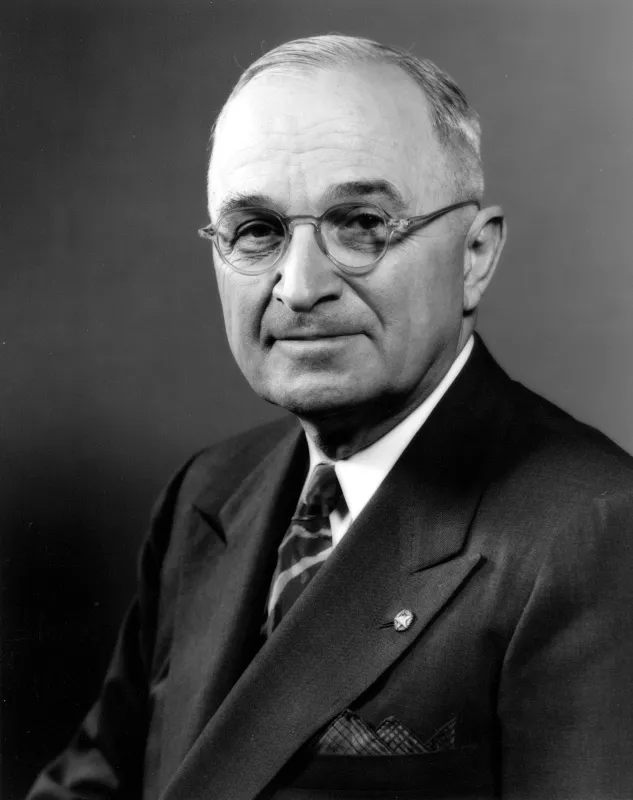 Photo: Harry Truman, via s3.amazonaws.com
Truman's lack of sophistication was legendary. He spoke with a Missouri twang, wore loud shirts, and played poker with cronies from back home. Intellectual elites dismissed him as unfit for high office. When Roosevelt chose him as vice president in 1944, many Democrats were horrified.
But when Truman suddenly became president after Roosevelt's death, his common-sense approach and plain-spoken honesty proved exactly what America needed. The failed farmer made some of the most consequential decisions in world history — ending World War II, launching the Marshall Plan, and establishing NATO. His presidency proved that sometimes the best leaders are the ones nobody sees coming.
The Thread That Binds Them
What connected these unlikely presidents wasn't privilege or preparation — it was resilience. They'd all been underestimated, overlooked, or written off at various points in their lives. That experience taught them something that can't be learned in any classroom: how to fight for what they believed in, even when the odds seemed impossible.
Their stories remind us that American democracy was designed for exactly these kinds of leaders — not the expected choices, but the surprising ones who understood struggle because they'd lived it. In a country founded on the radical idea that anyone could rise to lead, these seven presidents proved that the most unlikely candidates sometimes make the most authentic leaders.