Late Bloomer: The Housekeeper Who Cracked Legal History's Glass Ceiling

The Morning Routine
Every morning for twenty-four years, Rosa Martinez arrived at the Riverside Hotel in downtown Phoenix at 5:30 AM sharp. She'd punch her time card, collect her cart of cleaning supplies, and begin the methodical process of transforming thirty-six guest rooms from chaos back to pristine condition.
 Photo: Riverside Hotel, via tioman.org
What her supervisors never knew—what nobody knew—was that Rosa couldn't read the work orders clipped to her cart. She'd memorized the room numbers by sight and developed an elaborate system of visual cues to navigate her responsibilities. The yellow sticky notes meant "extra towels." The red ones indicated "checkout cleaning." She became a master of improvisation, of appearing competent while harboring a secret that felt like carrying around a live grenade.
Rosa Martinez was illiterate, and she was terrified that someone would find out.
The Breaking Point
The moment that changed everything happened on a Tuesday in March 1987. Rosa's youngest daughter, Carmen, came home from fourth grade with tears streaming down her face. She'd failed a reading test and needed help with her homework.
"Mami, can you read this to me?" Carmen asked, holding up a simple story about a family of rabbits.
Rosa stared at the page, seeing nothing but meaningless squiggles and curves. She'd managed to fake her way through parent-teacher conferences and school forms by claiming she'd forgotten her glasses or asking other parents to "double-check" documents for her. But this was different. This was her daughter, looking up at her with complete trust and expectation.
"Let me make dinner first, mija," Rosa said, her voice barely steady. "Then we'll read together."
That night, after Carmen fell asleep, Rosa made a decision that would reshape two lives. She was going to learn to read.
The Kitchen Classroom
Rosa's education began at her kitchen table, using Carmen's discarded schoolbooks and a Spanish-English dictionary she'd bought at a garage sale. Every night after her hotel shift, she'd sit under the harsh fluorescent light and trace letters with her finger, sounding out words the way she'd heard Carmen's teachers do during school visits.
The process was excruciating. Simple children's books that Carmen breezed through would take Rosa hours to decode. She'd write letters on napkins during her lunch breaks, practicing the alphabet like a six-year-old. Her coworkers thought she was writing grocery lists.
Progress came in microscopic increments. After three months, she could read Carmen's bedtime stories—haltingly, with frequent stops to puzzle out unfamiliar words, but she could do it. After six months, she was reading the local Spanish newspaper. After a year, she'd moved on to simple English novels from the library.
The transformation wasn't just intellectual—it was emotional. For the first time in her adult life, Rosa felt like she belonged in the world instead of constantly trying to hide from it.
The Accident That Opened Doors
In 1991, a ceiling leak in the Riverside Hotel's east wing caused Rosa to slip and fall while cleaning a guest room. The injury to her back was minor, but the legal implications were significant. The hotel's insurance company offered her a small settlement, assuming she'd sign the papers without question.
But Rosa had been reading everything she could get her hands on for four years. She understood enough to know the settlement was inadequate, and more importantly, she understood that she had rights.
She walked into the office of Hernandez & Associates, a small law firm that advertised in Spanish newspapers, and asked to speak with someone about her case. The receptionist, assuming Rosa was there to clean the office, directed her to the supply closet.
"I'm not here to clean," Rosa said firmly. "I'm here to hire a lawyer."
The Spark
Attorney David Hernandez took Rosa's case and was impressed by her detailed understanding of the incident and her thoughtful questions about the legal process. During one of their meetings, he mentioned that he was looking for a part-time paralegal—someone bilingual who could help with client intake and document preparation.
"I don't have experience," Rosa told him, "but I learn fast."
She started working for Hernandez & Associates twenty hours a week, initially just answering phones and filing papers. But Rosa absorbed legal concepts the way she'd once absorbed cleaning routines—methodically, completely, and with an attention to detail that impressed everyone around her.
Within two years, she was conducting client interviews and helping prepare legal briefs. Hernandez encouraged her to take paralegal certification courses at the local community college. Rosa, now forty-six, found herself sitting in classrooms with students young enough to be her children, but she didn't care. She was hungry for knowledge in a way that only someone who'd been denied it could understand.
The Impossible Dream
In 1995, at age forty-nine, Rosa made an announcement that shocked everyone who knew her: she was applying to law school.
The University of Arizona's admissions committee had never seen an application quite like hers. Rosa's undergraduate degree from Phoenix Community College was recent, earned part-time over six years while working full-time as a paralegal. Her LSAT scores were solid but not spectacular. What set her apart was her personal statement—a brutally honest account of her journey from illiteracy to legal advocacy.
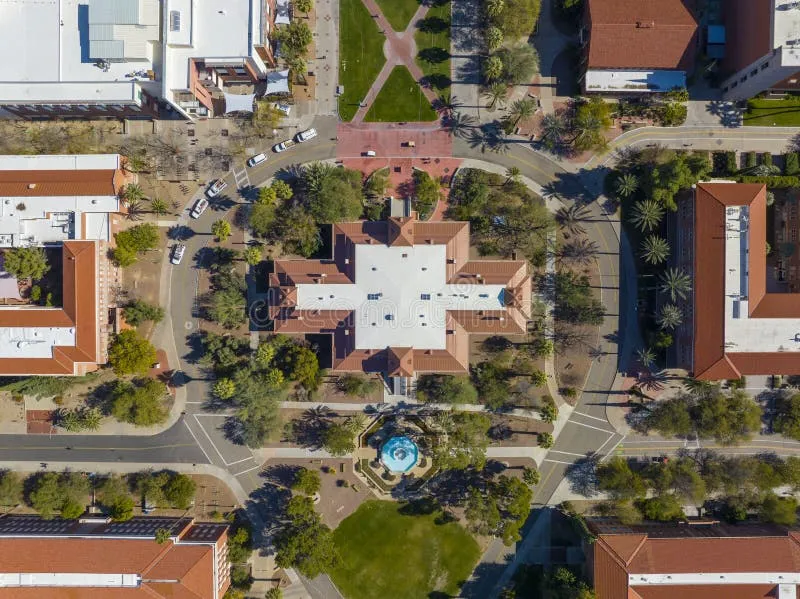 Photo: University of Arizona, via thumbs.dreamstime.com
She was accepted with a partial scholarship.
Law school at fifty was everything Rosa had expected and nothing she'd prepared for. She studied harder than students half her age, often staying in the library until midnight before driving home to her small apartment. Her classmates initially treated her with a mixture of curiosity and condescension, but Rosa's work ethic and practical insights soon earned their respect.
She graduated in 1998, three months before her fifty-second birthday.
The Practice
Rosa passed the Arizona bar exam on her first attempt in July 1998. At fifty-seven, she became one of the oldest first-time lawyers in the state's history. Instead of joining an established firm, she opened her own practice, focusing on immigration law and workers' rights.
Her client base consisted largely of people like her former self—working-class immigrants who felt intimidated by the legal system and needed an advocate who understood their fears and limitations. Rosa's office was in a strip mall between a laundromat and a Mexican restaurant, but she handled cases that made it all the way to federal court.
One of her most significant victories came in 2003, when she successfully argued that hotels had an obligation to provide safety training materials in workers' native languages. The case, Martinez v. Riverside Hospitality Group, established precedent that affected workplace safety standards across Arizona.
The irony wasn't lost on anyone: Rosa had sued her former employer and won.
The Second Career
Between 1999 and her retirement in 2015, Rosa Martinez handled over 400 cases and won the majority of them. She became known in Phoenix legal circles as "La Abuela"—the grandmother—partly because of her age when she started practicing, and partly because of the maternal way she treated clients who reminded her of herself.
She never forgot where she came from. Rosa continued to live in the same modest neighborhood where she'd raised her children, driving a used Honda Civic and shopping at the same grocery stores she'd frequented as a hotel housekeeper. Success didn't change her circumstances as much as it changed her confidence.
In 2010, at age sixty-four, she was invited to speak at the University of Arizona Law School's commencement ceremony. Her speech, delivered to an audience of new graduates and their families, was characteristically direct:
"Some of you think your education is over. Mine didn't start until I was forty-two. Don't let anyone tell you it's too late to become who you're supposed to be."
The Legacy
Rosa Martinez retired from active practice in 2015, but she continued working part-time with adult literacy programs and immigrant advocacy groups. Her daughter Carmen, inspired by her mother's transformation, became a teacher and later a principal in the Phoenix school district.
The Riverside Hotel, where Rosa once cleaned rooms while hiding her inability to read, now displays a small plaque in its lobby honoring her contributions to workers' rights. It's a recognition that would have been unimaginable to the frightened woman who once memorized room numbers to hide her secret.
Rosa's story challenges every assumption about timelines and possibilities. She proved that education isn't just for the young, that careers can begin when others are ending, and that the most powerful advocates are often those who understand struggle from the inside.
At seventy-seven, Rosa still reads voraciously—legal journals, novels, newspapers, anything she can get her hands on. It's a habit born from deprivation and sustained by joy. Every word is a small victory, every page a reminder that it's never too late to rewrite your story.