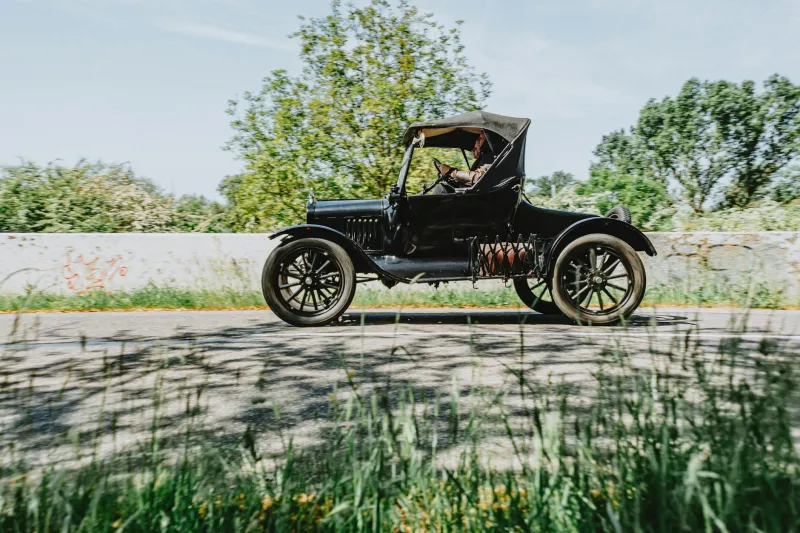
The Bet That Started It All
On May 23, 1903, Dr. Horatio Nelson Jackson was enjoying a perfectly civilized evening at the University Club in San Francisco when someone made a comment that would change American culture forever. The conversation had drifted to automobiles—those noisy, unreliable contraptions that occasionally puttered through city streets, terrifying horses and amusing pedestrians.
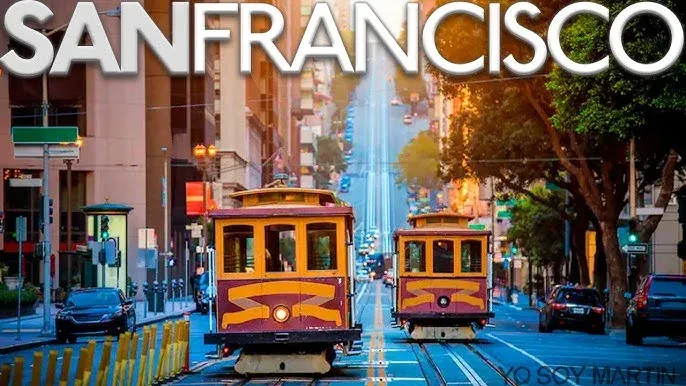 Photo: San Francisco, via mapupa.com
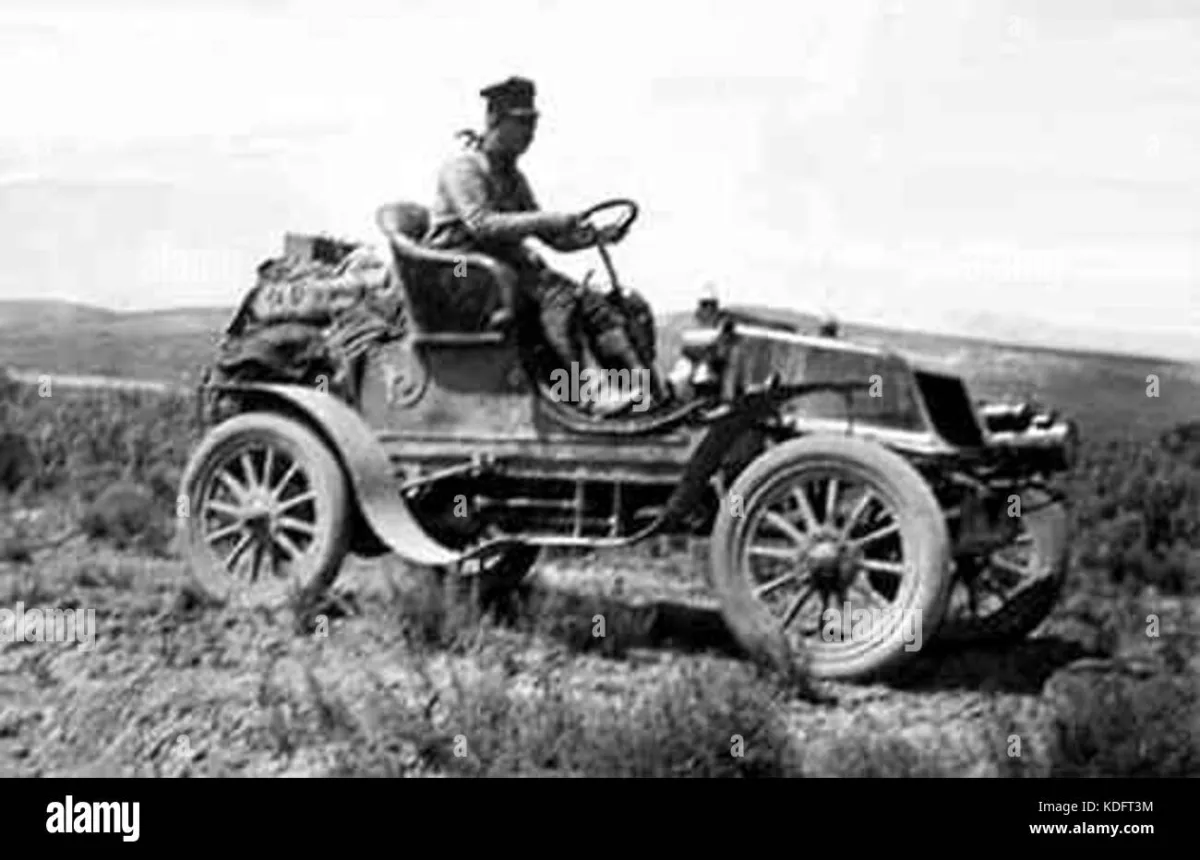 Photo: Dr. Horatio Nelson Jackson, via c8.alamy.com
"Automobiles will never replace horses," declared one gentleman. "They're toys for rich men, nothing more."
Jackson, a Vermont physician who had driven exactly one automobile in his entire life, found himself disagreeing. Perhaps it was the brandy, perhaps it was his natural contrarian streak, but when someone suggested that no automobile could possibly traverse the American continent, Jackson heard himself saying, "I'll bet fifty dollars I can drive one to New York."
The bet was accepted immediately. Sixty-three days later, Jackson would roll into Manhattan having accidentally invented the American road trip.
The Car He Didn't Own and the Roads That Didn't Exist
Jackson's first problem was obvious: he didn't own an automobile. His second problem was less apparent but far more serious: there were virtually no roads suitable for automobile travel between San Francisco and New York.
The transcontinental railroad had been connecting coasts since 1869, but roads remained local affairs—muddy tracks between nearby towns, designed for horses and wagons, not motorized vehicles. Most Americans lived their entire lives within a twenty-mile radius of their birthplace.
Undeterred by these minor details, Jackson purchased a 1903 Winton touring car for $3,000—roughly equivalent to $100,000 today. The Winton was considered reliable by 1903 standards, which meant it might run for several consecutive hours without major mechanical failure.
Jackson's driving experience consisted of one afternoon lesson from the Winton dealer. His mechanical knowledge was limited to what he'd absorbed during that same afternoon. His cross-country navigation plan was essentially "head east and hope for the best."
The Mechanic Who Made It Possible
Realizing he needed professional help, Jackson hired Sewall Crocker, a twenty-two-year-old bicycle mechanic and chauffeur, to serve as co-driver and chief mechanical problem-solver. Crocker possessed the practical skills Jackson lacked: he could repair engines, fix flat tires, and navigate by compass when roads disappeared entirely.
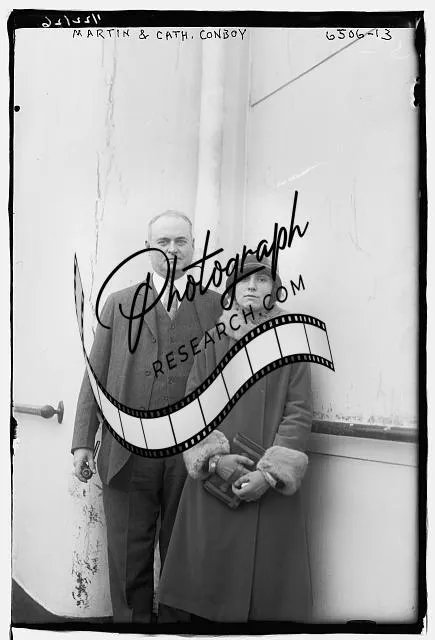 Photo: Sewall Crocker, via www.photographresearch.com
Their partnership represented a perfect collision of American optimism and ingenuity. Jackson provided the vision and financing; Crocker provided the expertise to make impossible dreams temporarily functional.
They named their automobile "Vermont" and loaded it with camping gear, spare parts, tools, and enough provisions for what they optimistically estimated would be a thirty-day journey.
Sixty-Three Days of Beautiful Disaster
What followed was part adventure story, part comedy of errors, and part accidental anthropological expedition through an America that was disappearing even as they drove through it.
They got lost repeatedly. Roads would simply end without warning, leaving them to navigate by wagon tracks, cattle paths, or pure intuition. In Nevada, they drove across railroad tracks when no other route existed. In Wyoming, they followed telegraph lines when everything else failed.
Mechanical breakdowns were constant. They replaced eighteen flat tires, rebuilt the engine twice, and improvised repairs using fence wire, leather straps, and whatever materials local blacksmiths could provide. In Idaho, they spent three days waiting for replacement parts that had to be shipped by train from Detroit.
The weather was merciless. They endured dust storms that buried the car, rainstorms that turned roads into impassable swamps, and mountain passes where snow was still falling in late May.
The America They Discovered
But Jackson and Crocker's journey revealed something extraordinary: an America hungry for connection. In every small town, crowds gathered to examine their automobile—the first most residents had ever seen. Local newspapers covered their progress. Mechanics volunteered assistance. Families offered meals and lodging.
They were witnessing the last days of isolated, self-sufficient rural America. Telegraph lines were already connecting distant communities, but physical travel remained difficult and rare. Most Americans never ventured far from home; Jackson and Crocker were showing them that their continent was navigable, that distant places were reachable.
In Colorado, they picked up a mascot: a bulldog named Bud, who rode the remaining 2,000 miles wearing custom-made goggles to protect his eyes from dust. Bud became America's first celebrity road trip companion, his photograph appearing in newspapers nationwide.
The Arrival That Changed Everything
On July 26, 1903, sixty-three days after leaving San Francisco, Jackson and Crocker drove their battered Winton into New York City. They had covered approximately 4,500 miles, consumed 800 gallons of gasoline, and spent nearly $8,000—roughly $250,000 in today's money.
More importantly, they had proven that automobile travel across America was possible. Difficult, expensive, and occasionally terrifying, but possible.
Their arrival made national news. The automobile industry, previously focused on urban markets, suddenly recognized the potential for long-distance travel. Road improvement became a political issue. Tourism began evolving from railroad-dependent luxury to automobile-enabled adventure.
The Cultural Revolution They Started
Jackson's bet had accidentally demonstrated that Americans possessed both the technology and the spirit for continental mobility. Within a decade, automobile ownership was exploding. Within two decades, the federal government was planning a national highway system.
The road trip—that uniquely American combination of adventure, independence, and optimism—was born from Jackson's stubborn refusal to back down from a bar bet. His journey established the cultural template: load up the car, head toward the horizon, and trust that adventure will find you.
Modern America's relationship with automobiles, highways, and the open road traces directly back to that 1903 Winton puttering through Nevada dust storms. Every family vacation, every cross-country move, every spontaneous weekend getaway carries DNA from Jackson's magnificent folly.
The Legacy of Beautiful Stubbornness
Dr. Horatio Nelson Jackson never intended to transform American culture. He just wanted to win a fifty-dollar bet and prove that automobiles were more than rich men's toys. His success came not from careful planning or superior resources, but from the peculiarly American belief that impossible things become possible through sheer persistence.
Today, millions of Americans drive cross-country annually, following interstate highways that make Jackson's route seem quaint. But every road trip carries echoes of that original journey: the promise that America's vastness is conquerable, that adventure awaits beyond the next hill, and that sometimes the best way forward is simply to point the car east and start driving.