The Kid with the Bicycle Who Gave America a Voice: Edwin Armstrong's Unlikely Journey to FM Radio

The Boy Who Heard Differently
In 1906, while Marconi and Edison battled for control of America's airwaves, a scrawny fifteen-year-old named Edwin Armstrong was pedaling through the streets of Yonkers, New York, delivering telegrams for Western Union. Between runs, he'd race home to tinker with coils of wire and vacuum tubes in his parents' cramped attic, chasing a sound that existed only in his imagination.
 Photo: Yonkers, New York, via c8.alamy.com
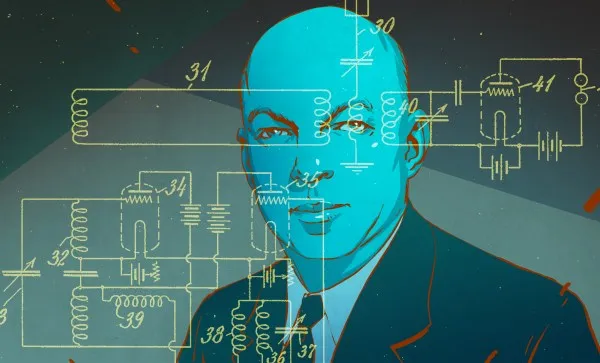 Photo: Edwin Armstrong, via hackaday.com
The radio industry's giants barely knew his name. They certainly didn't consider him competition.
They should have.
Static in Paradise
Armstrong's obsession began with frustration. Early AM radio was a mess — a crackling symphony of static that made every broadcast sound like it was transmitted through a thunderstorm. The established wisdom said this was simply the price of wireless communication. You wanted to hear voices through the air? You'd have to live with the noise.
But Armstrong, who had never taken a formal engineering course in his life, refused to accept that compromise. While studying at Columbia University on a scholarship, he spent his evenings in the basement laboratory, methodically testing theories that his professors dismissed as impossible.
 Photo: Columbia University, via images.squarespace-cdn.com
"The kid's chasing ghosts," one instructor reportedly said. "Static is physics. You can't engineer your way around the laws of nature."
Armstrong disagreed.
The Breakthrough Nobody Wanted
By 1933, after years of methodical experimentation, Armstrong had developed something extraordinary: a method of transmitting radio signals that eliminated static entirely. His frequency modulation system — FM radio — delivered sound so clear it seemed to leap directly from the studio into listeners' living rooms.
He demonstrated his invention to David Sarnoff, the powerful head of RCA, expecting immediate adoption. Instead, Sarnoff saw a threat to his company's massive investment in AM infrastructure.
"This is wonderful," Sarnoff told Armstrong, "but it's going to take twenty years to implement."
What he meant was: We're not implementing it at all.
David vs. Goliath, Radio Edition
What followed was a decade-long patent war that would have broken a lesser man. RCA, CBS, and other industry giants deployed armies of lawyers to challenge Armstrong's patents, steal his innovations, and bury his technology under an avalanche of legal paperwork.
Armstrong fought back with the same stubborn persistence that had driven him to perfect FM radio in the first place. He sold his patents, mortgaged his home, and poured every dollar he had into legal fees. His wife begged him to settle. His friends urged him to walk away.
But Armstrong had spent his life being underestimated. He wasn't about to start backing down now.
The Victory He Never Saw
On January 31, 1954, Edwin Armstrong stepped out of his thirteenth-floor apartment window and fell to his death. The patent battles had consumed his fortune, his health, and finally, his hope.
Just months later, the courts ruled in his favor. RCA was ordered to pay millions in damages for patent infringement. FM radio began its inevitable march toward becoming the standard for high-quality audio transmission.
Today, every car radio, every stereo system, every smartphone relies on the technology that Armstrong perfected in his parents' attic. The telegram boy who was never supposed to matter had quietly revolutionized how the entire world listens.
The Signal Through the Static
Armstrong's story isn't just about radio technology — it's about the power of persistent curiosity in the face of institutional indifference. While the industry's established players focused on protecting their existing investments, a self-taught engineer with a bicycle and a basement laboratory was building the future.
The next time you tune into a crystal-clear FM station, remember the kid from Yonkers who refused to accept that static was simply the price of progress. Sometimes the most important innovations come not from corporate research labs or prestigious universities, but from attics and basements where stubborn dreamers refuse to take no for an answer.
Edwin Armstrong never lived to see his vindication, but his signal still reaches us today — clear, strong, and completely free of static.