Second Acts: When Life's Best Chapters Begin After Fifty

The Late Bloomers Club
American business mythology loves the young genius—the college dropout who builds an empire from a dorm room, the twenty-something visionary who disrupts entire industries. But some of the most transformative companies in American history were built by people who society had already written off as past their prime.
These seven entrepreneurs didn't just start over after fifty—they revolutionized entire industries, created household names, and proved that experience, resilience, and desperation can be more powerful than youthful enthusiasm.
Ray Kroc: The Milkshake Machine Salesman (Started McDonald's at 52)
By 1954, Ray Kroc was a tired traveling salesman hawking milkshake machines across the Midwest. He'd spent thirty years in various sales jobs, watching younger men climb corporate ladders while he remained stuck in the middle. At fifty-two, he was divorced, financially struggling, and beginning to wonder if his best years were behind him.
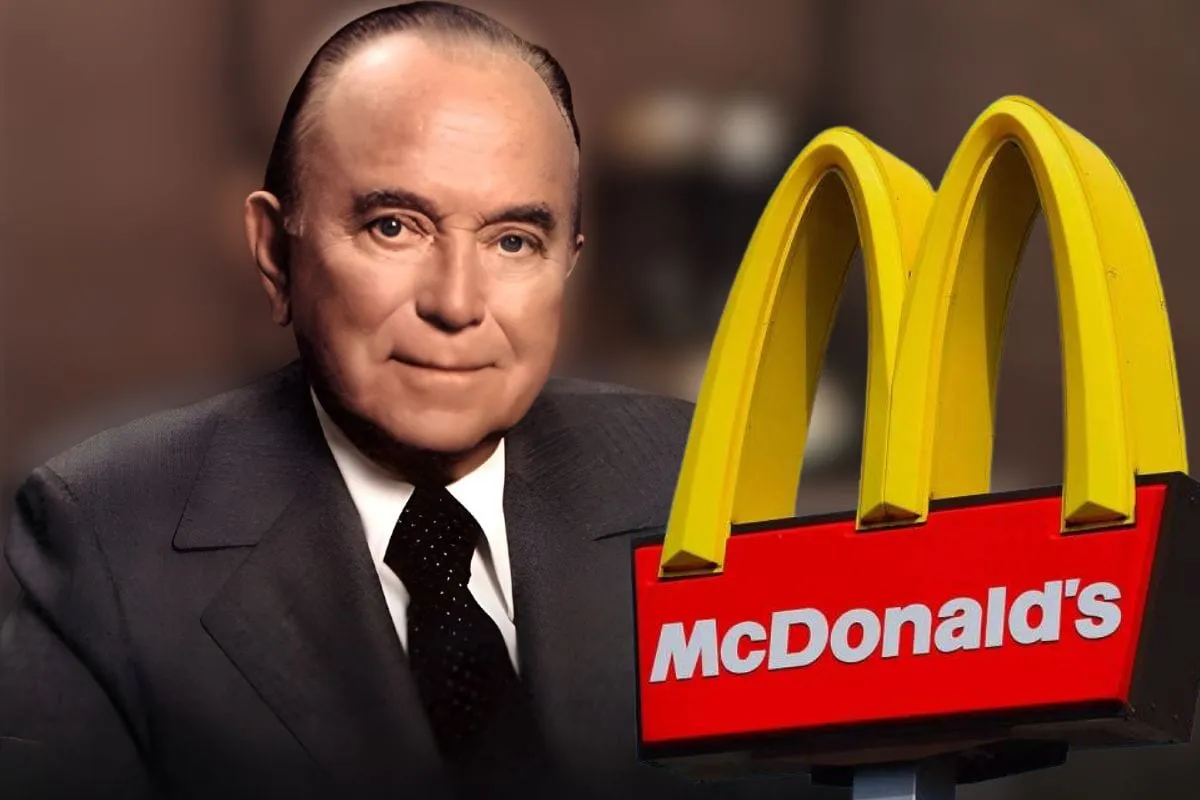 Photo: Ray Kroc, via thelondonwire.uk
Then he visited a small hamburger stand in San Bernardino, California.
The McDonald brothers had ordered eight milkshake machines—more than most restaurants used in a month. Curious about their operation, Kroc discovered a revolutionary approach to fast food: standardized procedures, assembly-line efficiency, and consistent quality. He saw something the brothers didn't—the potential to replicate their system nationwide.
Kroc convinced the McDonald brothers to let him franchise their concept. His first restaurant opened in Des Plaines, Illinois, in 1955. He was fifty-three years old and had never owned a restaurant. Within a decade, McDonald's was a national phenomenon. By the time Kroc died in 1984, the company he'd built after most people retire was worth billions.
Laura Scudder: The Potato Chip Pioneer (Revolutionized Snack Foods at 58)
Laura Scudder had been running a small potato chip business in Monterey Park, California, since the 1920s, but she was barely breaking even. Most potato chips were sold in bulk from large barrels in grocery stores, getting stale and broken in the process. At fifty-eight, Scudder was tired of watching customers complain about soggy chips.
 Photo: Laura Scudder, via www.kroger.com
In 1926, she had an idea that seemed almost too simple: put the chips in individual wax paper bags and seal them while they were still fresh. Her employees thought she was crazy—the extra packaging would increase costs and slow production. But Scudder was convinced that freshness would sell.
She was right. Scudder's "Potato Chip Bags" became the first hermetically sealed snack food packages in America. Her innovation didn't just save her business—it created the entire modern snack food industry. Every bag of chips sold today traces its lineage back to Laura Scudder's late-in-life gamble on packaging.
Asa Candler: The Pharmacist's Second Chance (Bought Coca-Cola at 57)
Asa Candler had been a small-town pharmacist in Atlanta for over twenty years when he heard about a peculiar syrup being sold by a local inventor named John Pemberton. The concoction, called Coca-Cola, was supposed to be a patent medicine for headaches and fatigue. Pemberton was desperate for money and willing to sell the formula cheap.
In 1888, at age fifty-seven, Candler bought the rights to Coca-Cola for $2,300—a significant investment for a pharmacist with a modest income. Most people thought he'd made a terrible mistake. Patent medicines were falling out of favor, and the syrup tasted strange.
But Candler saw something others missed. Instead of marketing Coca-Cola as medicine, he repositioned it as a refreshing beverage. He invested in advertising, standardized the formula, and focused on taste rather than supposed health benefits. By 1895, Coca-Cola was being sold nationwide. Candler had transformed a failed patent medicine into America's most recognizable brand.
Momofuku Ando: The Bankrupt Businessman (Invented Instant Ramen at 48)
Momofuku Ando's textile business collapsed in 1957, leaving him bankrupt at age forty-seven. Most men his age would have looked for steady employment, but Ando had a different idea. He'd noticed long lines at ramen stands in post-war Osaka and wondered if there was a way to make the popular noodle soup more convenient.
Working in a shed behind his house, Ando experimented with different methods of preserving noodles. His breakthrough came when he discovered that flash-frying noodles in oil would dehydrate them while creating tiny holes that would allow hot water to rehydrate them quickly.
In 1958, at age forty-eight, Ando launched Chicken Ramen, the world's first instant noodle product. Japanese consumers were skeptical at first—the product cost more than fresh ramen and required a completely new way of thinking about food preparation. But convenience won out. Within a decade, instant ramen had become a global phenomenon.
Ando's company, Nissin Foods, eventually became one of Japan's largest food manufacturers. The man who went bankrupt at forty-seven had created an entirely new food category that would feed millions of college students and busy workers worldwide.
Wally Amos: The Talent Agent's Cookie Dreams (Started Famous Amos at 39)
Wally Amos was a successful talent agent in Hollywood, representing acts like Simon & Garfunkel and Diana Ross. But by his late thirties, he was burned out on the music business and looking for something different. His aunt's chocolate chip cookie recipe had always been a hit at parties—friends constantly asked him to bake more.
In 1975, at thirty-nine, Amos took his life savings of $25,000 and opened a small cookie store on Sunset Boulevard. His friends in the entertainment industry thought he'd lost his mind. Who leaves a successful career to sell cookies?
But Amos understood marketing in a way that traditional bakers didn't. He treated his cookies like entertainment, complete with celebrity endorsements, flashy packaging, and promotional events. Famous Amos cookies became the first gourmet cookie brand sold in supermarkets nationwide.
The company eventually grew beyond Amos's control, and he lost ownership in the 1980s. But his innovation—treating cookies as a premium consumer product rather than a homemade treat—created the entire gourmet snack industry.
Dave Thomas: The Dropout's Determination (Founded Wendy's at 37)
Dave Thomas dropped out of high school at fifteen to work in restaurants. For over twenty years, he bounced between different jobs in the food service industry—short-order cook, restaurant manager, franchise operator. By his mid-thirties, he was running four failing KFC restaurants in Columbus, Ohio, and wondering if he'd ever amount to anything more than a middle manager.
In 1969, at thirty-seven, Thomas sold his stake in the KFC restaurants and used the money to open his own hamburger restaurant. He named it Wendy's after his daughter and focused on what he saw as gaps in the fast-food market: fresh meat, customizable orders, and higher-quality ingredients.
The first Wendy's opened in Columbus in November 1969. Thomas was competing against McDonald's and Burger King, both well-established chains with deep pockets and proven systems. But his focus on quality and customer service resonated with consumers tired of assembly-line fast food.
By 1976, there were 500 Wendy's restaurants. Thomas became the face of the brand through television commercials, turning his folksy personality and late-start story into marketing gold. The high school dropout who spent twenty years in other people's kitchens had built the third-largest hamburger chain in America.
Martha Stewart: The Stockbroker's Reinvention (Built Media Empire at 41)
Martha Stewart was a successful stockbroker on Wall Street in the 1970s, earning a six-figure income in a male-dominated industry. But after a decade of trading securities, she was restless and looking for something more creative. In 1982, at age forty-one, she left Wall Street to start a catering business from her Connecticut home.
 Photo: Martha Stewart, via www.evestoneantiques.com
Friends thought she was crazy to leave a lucrative career for the uncertainty of food service. But Stewart saw an opportunity that others missed—she could apply the same attention to detail and systematic approach that made her successful on Wall Street to the world of entertaining and lifestyle.
Her catering business led to a cookbook, which led to magazine articles, which led to her own magazine, "Martha Stewart Living," launched in 1990. Stewart had created something entirely new—a lifestyle brand that treated domestic activities with the same seriousness as business ventures.
By the late 1990s, Martha Stewart Living Omnimedia was a publicly traded company worth hundreds of millions of dollars. The former stockbroker had transformed herself into America's most influential lifestyle guru, proving that Wall Street skills could be just as valuable in the kitchen as in the trading pit.
The Common Thread
These late-blooming entrepreneurs shared several characteristics that traditional business wisdom often overlooks. They had decades of experience in other fields, giving them insights that younger competitors lacked. They understood failure intimately, making them more resilient when facing setbacks. And they had less to lose—their previous careers had already provided financial security or had failed completely.
Most importantly, they were old enough to trust their instincts over conventional wisdom. When everyone said their ideas wouldn't work, they had the confidence that comes from surviving decades of other people being wrong about their potential.
American business culture celebrates youth and innovation, but these seven entrepreneurs proved that some of the most transformative ideas come from people who society has already counted out. Their success wasn't despite their age—it was because of everything that age had taught them about persistence, quality, and the power of second chances.