The phone company had cut off service again. Betty Sue Reynolds sat in her single-wide trailer in rural Tennessee, staring at the unpaid bills scattered across her kitchen table. Her husband was between jobs, the kids needed school clothes, and the refrigerator held more hope than food.
But Betty Sue had something most people didn't: a head full of songs and the stubborn belief that words could somehow pay the rent.
When Desperation Meets Determination
Reynolds learned English the hard way—with a worn dictionary and relentless practice. Born to a family that spoke only the mountain dialect of deep Appalachia, she spent her childhood translating between two worlds: the one she knew and the one she heard on the radio.
Music was her constant companion. While other kids played outside, Betty Sue sat by the old radio, writing down lyrics and trying to figure out how songs worked. She had no formal training, no music lessons, no connections to Nashville's inner circle. What she had was an ear for melody and an understanding of heartbreak that ran generations deep.
"I never thought about being a songwriter," she would later recall. "I just had all these stories in my head, and putting them to music seemed like the natural thing to do."
The First Sale That Changed Everything
In 1967, with the electricity about to be turned off, Reynolds made a desperate decision. She took the Greyhound bus to Nashville with a cardboard suitcase containing three songs she'd written on notebook paper. She had no appointments, no contacts, just an address she'd copied from a music magazine.
Music Row in those days was still small enough that a persistent stranger could knock on doors. Reynolds spent two days walking from office to office, getting turned away by secretaries who took one look at her secondhand dress and mountain accent and decided she wasn't worth their bosses' time.
On her last day, nearly out of money for the return ticket, she convinced a junior A&R man at a small publishing company to listen to one song. "Lonely Highway Blues" was pure Appalachian heartache set to a melody that stuck in your head for days.
He bought it on the spot for $50.
Building Hits from a Trailer
That first sale changed Reynolds' life, though not in the way Hollywood movies suggest. She didn't move to Nashville or sign with a major label. Instead, she went home to her trailer and kept writing, sending songs through the mail to the handful of publishers who now knew her name.
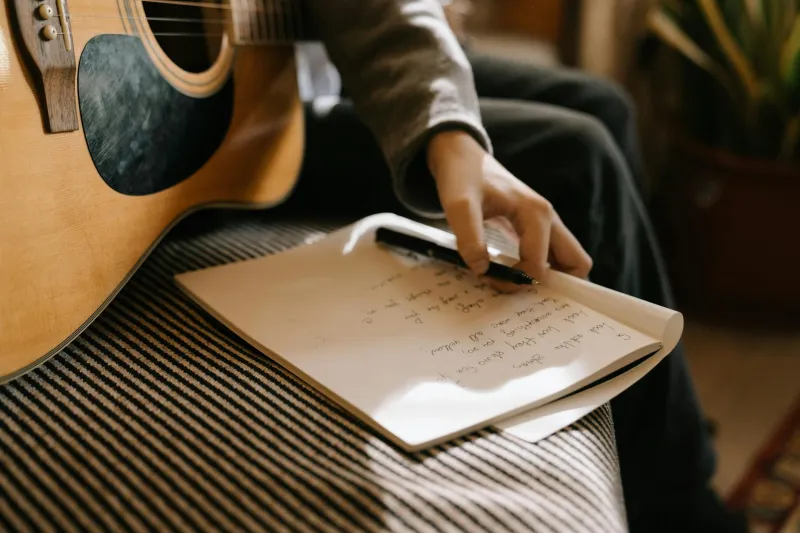
Working without a phone meant everything happened by letter. Reynolds would write a song, make a rough recording on a borrowed tape recorder, and mail it off with a self-addressed stamped envelope. Sometimes she'd wait months for a response. More often, she'd get no response at all.
But the songs that did sell began to add up. "Whiskey Won't Wash the Pain Away" became a minor hit for a struggling country singer. "Mama's Hands" found its way to a rising star who turned it into a Top 20 single. "Small Town Saturday Night" became a standard that dozens of artists would eventually record.
The Ghost Writer of Music Row
Reynolds developed a reputation as Nashville's most reliable ghost writer. When established artists needed a song that sounded authentically country—really country, not the polished version Music Row was starting to prefer—they called on her.
She wrote about things she knew: working three jobs to keep the lights on, watching your kids grow up wearing hand-me-downs, the particular loneliness of small-town life. Her songs had weight because they came from experience, not imagination.
"Betty Sue could write heartbreak like nobody else," recalled one Nashville producer. "She'd lived every line she wrote, and you could hear it in the songs."
Success Without Recognition
By the 1980s, Reynolds had co-written or contributed to over 200 recorded songs. Her work appeared on gold records and Grammy-nominated albums. Artists she'd never met were getting rich singing words she'd written in her trailer.
But the music business had a way of minimizing contributions from writers like Reynolds. Her name often appeared in tiny print or got lost in complex publishing arrangements. Interviews focused on the performers, not the people who gave them their words.
Reynolds didn't mind the anonymity—much. "I always said I wanted my songs to be famous, not me," she explained. "But it would have been nice if the checks were bigger."
The Dictionary That Built Dreams
People often asked Reynolds how someone with her background learned to write such sophisticated lyrics. The answer was always the same: that beat-up dictionary she'd carried since childhood.
"Every word I didn't know, I looked up," she said. "Every song I heard on the radio, I studied. You don't need college to learn language. You just need to want it bad enough."
She kept notebooks full of interesting words and phrases, building a vocabulary that could shift from mountain vernacular to polished poetry depending on what a song required. Her ability to write in different voices made her invaluable to publishers who needed songs for artists across the country spectrum.
Legacy in Three Chords and the Truth
Reynolds died in 2003, still living in a trailer (though a much nicer one) in the Tennessee hills. Her obituary was two paragraphs in the local paper. But flip through any comprehensive history of country music, and you'll find her fingerprints on dozens of songs that helped define the genre.
Today, streaming services have made it easier to trace songwriting credits, and Reynolds' contributions are finally getting recognition. Young songwriters study her work, amazed by how much emotion she could pack into three minutes of music.
The woman who started with a dictionary and a dream proved that great songs don't require famous names or fancy studios—sometimes they just require someone willing to dig deep enough to find the truth, then brave enough to set it to music.
In a business built on image and connections, Betty Sue Reynolds succeeded on pure talent and mountain stubbornness. Not bad for a girl who learned English from a dictionary and sold her first song for grocery money.