
The Girl Who Started with Nothing
On a Louisiana cotton plantation in 1867, Sarah Breedlove entered a world that offered her precisely zero advantages. Born to formerly enslaved parents who were sharecropping their way through Reconstruction's broken promises, she inherited poverty, illiteracy, and a social system designed to keep her exactly where she started.
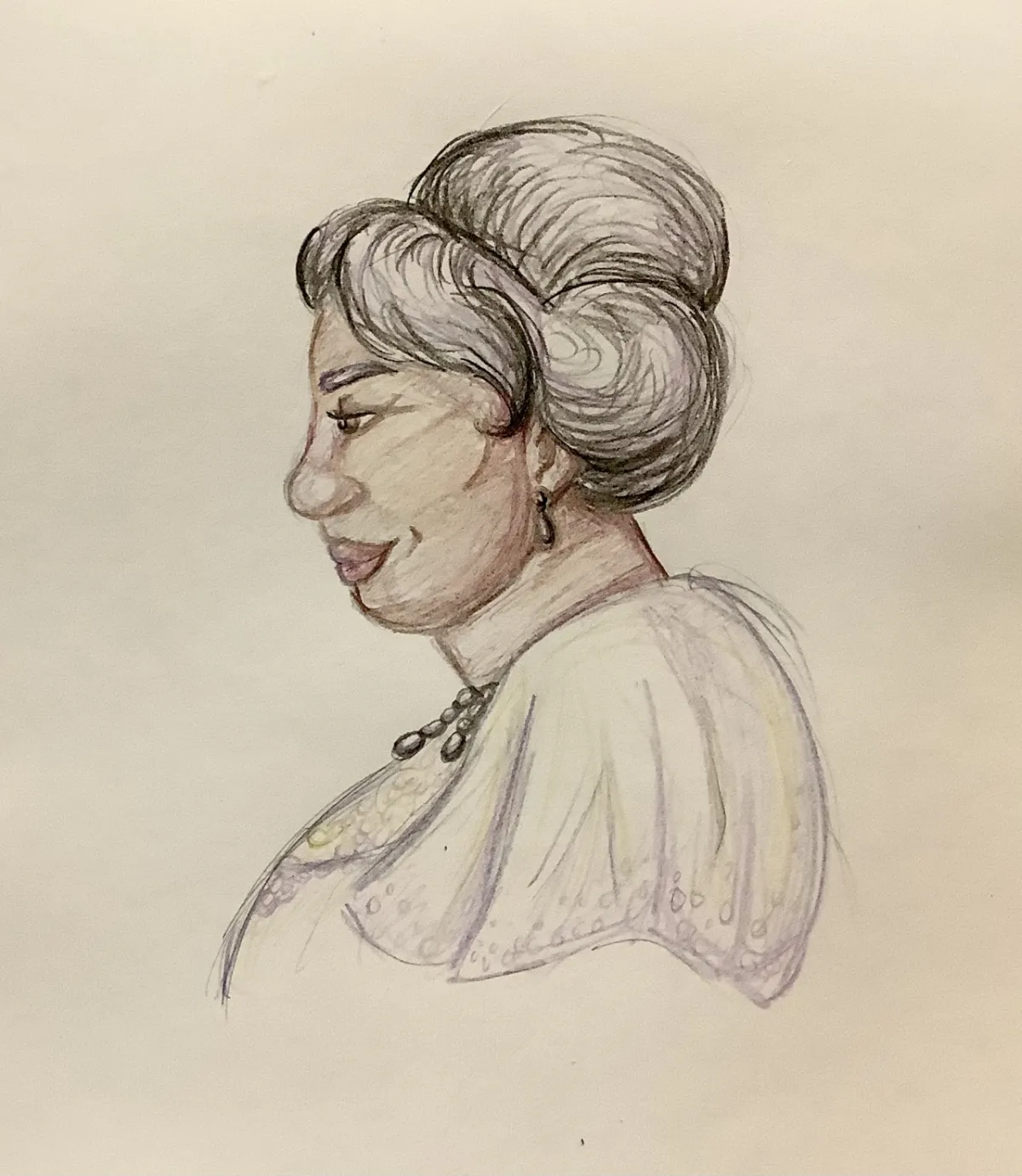 Photo: Sarah Breedlove, via 64.media.tumblr.com
By age seven, she was picking cotton alongside adults, her small hands bleeding from the bolls' sharp edges. When her parents died within two years of each other, Sarah found herself orphaned before her tenth birthday, living with her sister and brother-in-law who saw her primarily as free labor.
Education wasn't an option—survival was the curriculum, and Sarah learned its harsh lessons daily.
Marriage as Escape, Tragedy as Teacher
At 14, Sarah married Moses McWilliams, less from love than from desperation to escape her sister's household. Marriage offered the only path to independence available to a Black girl in 1880s Louisiana, even if that independence came with its own set of constraints.
The young couple moved to Vicksburg, Mississippi, where Moses found work as a laborer and Sarah began learning the skills that would later build her empire—though she didn't know it yet. She took in washing, standing over steaming tubs for hours, her hands raw from lye soap and scalding water.
When their daughter A'Lelia was born in 1885, Sarah thought she had found stability. Instead, tragedy struck again. Moses died in 1887, leaving 20-year-old Sarah a widow with a toddler and no resources beyond her willingness to work.
The Education of a Washerwoman
St. Louis became Sarah's classroom, though she never set foot in a formal school. Working as a washerwoman, she earned $1.50 a week—barely enough to survive, but sufficient to send A'Lelia to public school. Education might have been denied to Sarah, but she was determined her daughter would have every opportunity she'd been refused.
 Photo: St. Louis, via www.kellyontheroad.com
During these St. Louis years, Sarah educated herself in ways no curriculum could have taught. She learned business by managing her tiny household budget. She learned chemistry by experimenting with different soap formulations to get clothes cleaner. She learned marketing by competing with other washerwomen for customers.
Most importantly, she learned that her biggest asset wasn't her strong back or willingness to work 16-hour days. It was her mind.
The Problem That Became an Opportunity
Around 1890, Sarah began experiencing severe hair loss—a common problem among Black women of her era, caused by poor nutrition, stress, and harsh hair care products. The available remedies were either ineffective or prohibitively expensive, leaving women like Sarah with few options.
While other women accepted hair loss as inevitable, Sarah saw it as a problem waiting for a solution. She began experimenting with different ingredients, mixing oils and sulfur compounds in her kitchen, testing formulations on herself and willing neighbors.
She couldn't read the labels on the products she was buying, so she memorized them by shape and color. She couldn't write down her formulas, so she committed every successful combination to memory. What seemed like disadvantages became advantages—she developed an intuitive understanding of her ingredients that no textbook could have provided.
The Birth of Madam C.J. Walker
In 1905, Sarah moved to Denver and reinvented herself as Madam C.J. Walker, taking the name from her third husband, Charles Joseph Walker. The new name represented more than marriage—it was a brand, carefully crafted to convey authority and expertise.
With $1.50 in savings, she launched the Madam C.J. Walker Manufacturing Company. Her first product, "Madam Walker's Wonderful Hair Grower," was based on years of kitchen-table experimentation. She mixed batches in washtubs, filled bottles by hand, and designed labels with the help of more educated friends.
Sales were door-to-door, woman-to-woman. Walker didn't just sell hair care products—she sold transformation, confidence, and the possibility that circumstances could be changed with the right combination of effort and innovation.
Building More Than a Business
As her company grew, Walker revolutionized more than hair care. She created an entire industry around Black beauty, establishing beauty schools, training thousands of women as "Walker Agents," and building a distribution network that stretched across the United States and into the Caribbean.
Her agents weren't just salespeople—they were entrepreneurs, many of them formerly domestic workers and farm laborers who found economic independence through Walker's system. She had created something unprecedented: a business model that lifted entire communities while building personal wealth.
Walker's Indianapolis factory employed hundreds of workers at wages above industry standard. She provided health insurance, vacation time, and educational opportunities—benefits that were radical for any employer in 1910, revolutionary for a Black woman business owner.
The Science Behind the Success
While Walker is often dismissed as merely a hair straightening pioneer, the reality was more complex. Her products were scientifically formulated to address specific problems: scalp disease, hair breakage, and poor nutrition's effects on hair health.
She developed the "Walker System," a comprehensive hair care regimen that combined proper nutrition, scalp massage, and carefully formulated products. Her approach was holistic, addressing health as much as appearance—a concept that wouldn't become mainstream in the beauty industry for another century.
Walker also pioneered direct marketing techniques that are still used today. Her before-and-after photographs, customer testimonials, and money-back guarantees became industry standards. She understood that selling beauty products meant selling hope, transformation, and self-worth.
From Illiteracy to Industry Leader
The woman who had learned to read by studying cereal boxes became a sought-after speaker, addressing audiences at business conferences and political rallies. She donated generously to civil rights organizations, funded scholarships for Black students, and used her wealth to challenge discrimination wherever she encountered it.
When she built her mansion on the Hudson River in 1917, she wasn't just displaying personal success—she was making a statement about Black capability and achievement. The girl from the cotton fields had become living proof that American opportunity, however constrained, could still be seized by those determined enough to grab it.
The Empire's Lasting Impact
When Madam C.J. Walker died in 1919, she left behind more than a million-dollar fortune. She had created an industry, employed thousands of people, and demonstrated that innovation could emerge from the most unlikely circumstances.
Her daughter A'Lelia inherited not just wealth but a business model that continued thriving for decades. More importantly, Walker had proven that the American dream, however imperfectly accessible, remained achievable for those willing to combine vision with relentless work.
The washerwoman who started with $1.50 had built something worth far more than money—she had built proof that brilliance and determination could overcome almost any obstacle, one perfectly formulated product at a time.