The Keeper Who Cracked the Code: How a Lighthouse Guardian's Kitchen Chemistry Revolutionized Maritime Safety
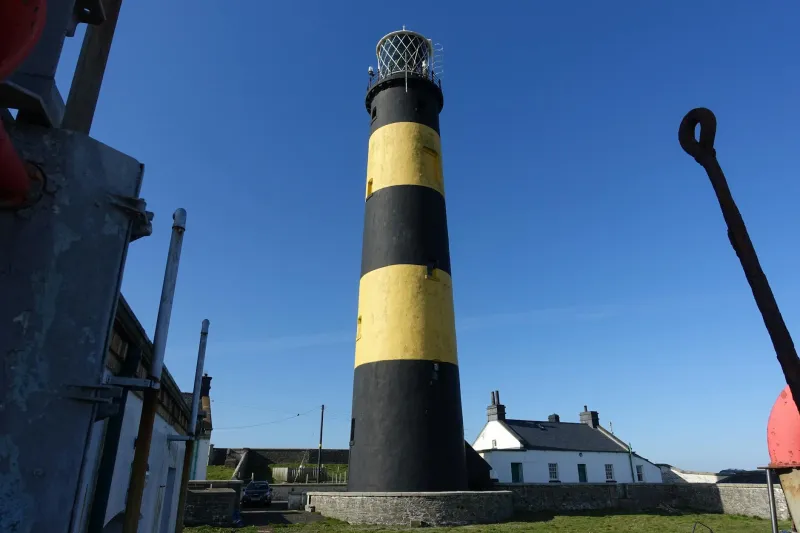
The Loneliest Laboratory in America
In 1847, the fog rolled across Lake Huron like a suffocating blanket, swallowing ships whole. From his perch 80 feet above the churning waters, William Henderson could hear them out there—captains shouting orders through the murk, crews scrambling to avoid the jagged rocks that had already claimed seventeen vessels that season alone.
Henderson had been keeper of Thunder Bay Light for three years, a job that attracted men comfortable with solitude and danger in equal measure. Most keepers filled their endless hours with whittling, reading scripture, or slowly going mad. Henderson did something different. He taught himself chemistry.
When Books Became Weapons Against the Dark
The son of a Michigan farm laborer, Henderson had left school at fourteen to work the docks in Detroit. But isolation at Thunder Bay sparked an intellectual hunger that surprised even him. Using his modest keeper's salary, he ordered chemistry textbooks from Chicago, transforming his small quarters into an unlikely laboratory.
Neighbors from the nearby fishing village would find him hunched over makeshift experiments, mixing compounds by candlelight. They thought he'd lost his mind to the endless fog and wind. They had no idea he was about to save their lives.
The existing fog signals were primitive affairs—basically large horns that could barely be heard over crashing waves. Ships would drift within yards of the rocks before realizing their peril. Henderson became obsessed with the problem of sound transmission through dense fog, spending his off-duty hours studying acoustic principles and chemical reactions.
The Breakthrough in a Converted Closet
Working in a converted storage closet, Henderson discovered that certain chemical compounds could create controlled explosions that produced sound waves far more penetrating than traditional horns. His breakthrough came during a particularly brutal November storm in 1851.
Using materials he'd ordered from suppliers in Buffalo and Cleveland—saltpeter, sulfur, and charcoal in precise ratios he'd calculated himself—Henderson created what he called a "chemical fog signal." The device used small, timed explosions to generate deep, booming sounds that could penetrate fog banks like nothing before.
The first test nearly shattered every window in the lighthouse. The second test guided three ships safely to harbor during a fog so thick Henderson couldn't see his own hand extended in front of his face.
From Keeper to National Pioneer
Word of Henderson's innovation spread through the tight-knit community of Great Lakes mariners faster than news of a gold strike. Ship captains began requesting assignments to routes that would take them past Thunder Bay, just to experience the revolutionary fog signal that seemed to cut through weather like a knife.
In 1853, Henderson did something that separated him from countless other backyard inventors: he wrote to Washington. His letter to the U.S. Lighthouse Board was part technical manual, part passionate plea. With no formal scientific credentials beyond his self-education, he laid out his findings in meticulous detail.
The response came faster than anyone expected. Federal inspectors arrived at Thunder Bay within six weeks, ready to dismiss another crackpot theory from the frontier. Instead, they found a functioning system that outperformed anything in their arsenal.
The Quiet Revolution
By 1856, Henderson's chemical fog signals were being installed at lighthouse stations from Maine to California. The impact was immediate and dramatic. Shipwreck rates along previously treacherous coastlines dropped by more than 60 percent within three years of implementation.
Henderson never got rich from his invention. The federal government purchased his design for a modest sum that barely covered his years of research costs. But he did receive something more valuable: recognition from the scientific community that had initially dismissed him as an untrained amateur.
The American Journal of Science published his findings in 1857, making Henderson one of the few lighthouse keepers ever to contribute to peer-reviewed scientific literature. His paper, "On the Transmission of Sound Through Atmospheric Disturbances," became required reading at naval academies.
Legacy Written in Lives Saved
Henderson continued as keeper of Thunder Bay Light until his death in 1882, training a generation of lighthouse personnel in the proper use of chemical fog signals. His meticulous records show that not a single ship was lost to fog-related accidents in his waters after 1854.
The broader impact of his work is harder to measure but no less significant. Maritime historians estimate that Henderson's fog signal innovations prevented thousands of deaths and millions of dollars in cargo losses during the latter half of the 19th century.
Today, electronic systems have replaced Henderson's chemical signals, but his fundamental insight—that scientific innovation could emerge from the most unlikely places—continues to inspire inventors working in isolation across America.
From his lonely tower on the Great Lakes, a man with an eighth-grade education had quietly revolutionized maritime safety. He proved that sometimes the most important laboratories aren't found in universities or corporate research centers, but in the hands of curious individuals willing to turn their solitude into something that serves the world.
Every time a ship safely navigates through fog today, it carries forward the legacy of William Henderson—the keeper who refused to let darkness and isolation define the limits of human ingenuity.