The Gentle Giant Who Tamed Eight Seconds: Lane Frost's Unlikely Path to Bull Riding Glory
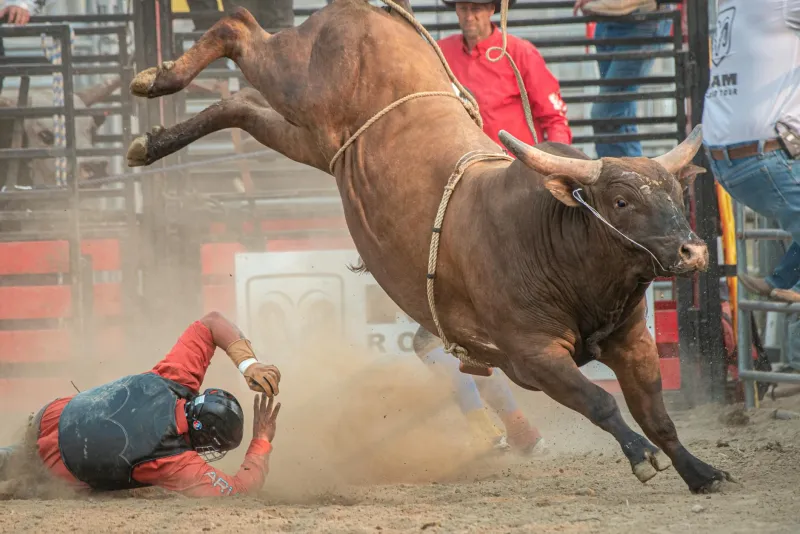
The Kid Who Didn't Fit the Mold
In the dust-choked arenas of small-town rodeo, where broken bones are badges of honor and bravado is currency, Lane Frost stood out like a Sunday school teacher at a honky-tonk. While other riders strutted and snarled, this lanky kid from Lane, Oklahoma, said "please" and "thank you" to everyone from stock contractors to arena janitors. His competitors thought he was soft. His critics thought he was naive. They were all dead wrong.
Born in 1963 in a town so small it shared his first name, Frost grew up in a world where rodeo wasn't just entertainment—it was a way of life. But even as a child, he approached the sport differently. Where others saw conquest, he saw partnership. Where others brought fury, he brought finesse.
Learning to Dance with Danger
Frost's father, Clyde, was a rodeo man himself, but he recognized something unique in his son's approach to bull riding. While most young riders tried to muscle their way through eight seconds of chaos, Lane studied the animals like a scholar. He'd spend hours watching bulls in the holding pens, learning their habits, their temperaments, their tells.
"That boy's got a way with animals that's different," old-timers would mutter, and they weren't always saying it as a compliment. In a sport that celebrated raw aggression, Frost's gentle nature seemed like a liability. He was too small at 130 pounds soaking wet, too polite in a world of trash talk, too thoughtful in a game of split-second reactions.
But what looked like weakness was actually wisdom. Frost understood something his louder, more aggressive competitors missed: bulls aren't machines to be conquered—they're athletes to be respected. This revelation would become the foundation of his success.
The Circuit That Almost Broke Him
The professional rodeo circuit of the 1980s was a brutal proving ground. Riders traveled thousands of miles in beat-up trucks, sleeping in cheap motels or their vehicles, chasing prize money that barely covered gas and entry fees. For every moment of glory in the arena, there were months of anonymity on dusty back roads.
Frost entered this world in 1981, and it nearly chewed him up. His first few years were a masterclass in perseverance through failure. He was thrown more often than he stayed on, criticized more than he was celebrated, and broke more bones than he cared to count. Traditional rodeo wisdom said he should get meaner, get angry, get tough.
Instead, Frost got quieter. He studied harder. He listened more intently to the subtle language of the animals he rode. While other riders psyched themselves up with aggression and adrenaline, Frost found his zone in a place of almost meditative calm.
The Breakthrough Nobody Saw Coming
By 1985, something had shifted. The kid who'd been dismissed as too gentle was suddenly one of the most consistent riders on the circuit. His secret wasn't revolutionary technique or superior strength—it was his ability to read and respond to each bull's unique personality and movement patterns.
Frost had developed what sports psychologists would later recognize as an extraordinary form of athletic intelligence. He could feel a bull's intentions through the rope in his hand, anticipate direction changes before they happened, and maintain his balance through movements that sent other riders flying.
More importantly, his respectful approach to the animals had earned him something invaluable: their cooperation. Bulls that bucked wildly for other riders often gave Frost cleaner, more predictable rides. It was as if they sensed his lack of malice and responded in kind.
Eight Seconds of Perfection
The 1987 season was Frost's masterpiece. Riding with a consistency that amazed even his harshest critics, he accumulated enough points to claim the Professional Rodeo Cowboys Association World Champion Bull Rider title. The quiet kid from Oklahoma had reached the pinnacle of one of America's most demanding sports.
What made his championship even more remarkable was how he won it. While other champions relied on spectacular rides and crowd-pleasing showmanship, Frost won through steady excellence. He rarely had the highest single score of any event, but he almost never had a bad ride either. In a sport defined by dramatic highs and lows, he found victory in the middle ground.
His victory speech was vintage Frost—humble, gracious, and focused more on thanking others than celebrating himself. "I just tried to do my best and respect the animals," he said. "Everything else took care of itself."
The Legacy of Gentleness
Frost's career was tragically cut short in 1989 when he was killed by a bull named Taking Care of Business at the Cheyenne Frontier Days rodeo. He was just 25 years old, at the peak of his powers and popularity.
But his impact on rodeo extended far beyond his championship or his untimely death. Frost had proven that success in even the most macho of sports didn't require abandoning decency or kindness. His approach influenced a generation of riders who learned that respect for their animal partners wasn't weakness—it was wisdom.
Today, Lane Frost is remembered not just as a champion, but as a revolutionary who changed how people thought about bull riding. In a sport that celebrated toughness above all else, he showed that sometimes the toughest thing you can do is stay gentle.
The Quiet Revolution
Frost's story resonates because it challenges our assumptions about what strength looks like. In a world that often equates loudness with leadership and aggression with achievement, he proved that quiet confidence and respectful determination could be just as powerful.
His championship wasn't just a personal victory—it was a validation for every person who's been told they're too soft, too nice, or too different to succeed in their chosen field. Sometimes the qualities that make you an outsider are exactly what make you extraordinary.
In the end, Lane Frost didn't just ride bulls—he rode his own path to greatness, proving that in any arena, authenticity beats artifice every time.