Illiterate at Fifty, Published by Sixty: How One Woman's Kitchen Became Her Classroom
Illiterate at Fifty, Published by Sixty: How One Woman's Kitchen Became Her Classroom
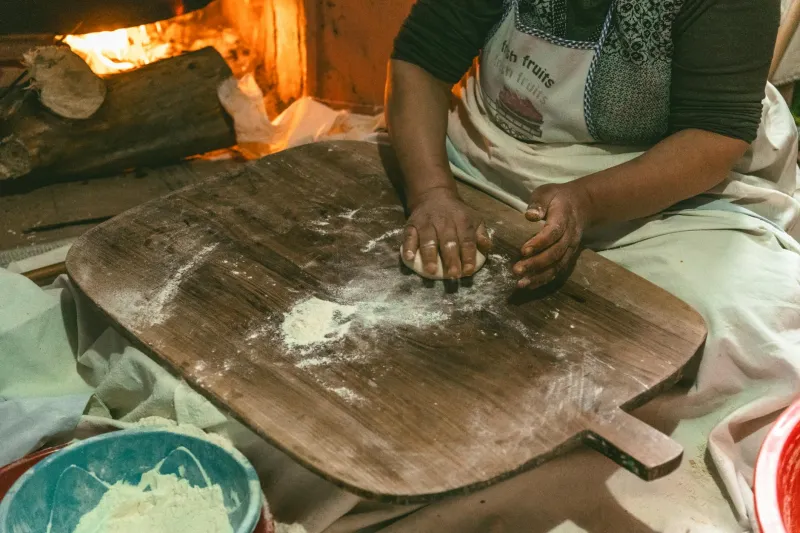
Margaret had been cooking for fifty years without ever reading a recipe. Her hands knew the weight of flour, the color of a proper roux, the exact moment a biscuit dough transformed from rough to silken. Her mother had taught her the way mothers in rural Georgia passed down knowledge—through watching, tasting, correcting, and repetition. There was no need for words on a page when the real education happened at the stove.
But there was a cost to this kind of learning. When Margaret's grandchildren asked her to write down her recipes, she couldn't. When neighbors wanted to preserve her techniques, there was no way to capture them except through memory. And when a literacy program volunteer named Patricia showed up at her door in 1978, Margaret almost turned her away.
The Moment Everything Changed
Patricia was persistent in the way only true believers can be. She came back every Tuesday for three months before Margaret finally relented. What Margaret didn't expect was how the act of learning to read would unlock something else entirely—a voice she didn't know she had.
The first words Margaret wrote down weren't just letters and sounds. They were flavors. They were stories. She began transcribing the recipes she'd carried in her muscle memory for half a century, but she didn't stop there. Alongside each ingredient list, she wrote the context. Why her grandmother made this cornbread. What her mother added during hard times. Which dish meant celebration, which one meant comfort.
What started as simple literacy practice became something closer to memoir. Each recipe became a portal to a specific moment, a specific person, a specific kind of hunger—emotional as much as physical.
From Notebook to Newsstand
A community college instructor who volunteered alongside Patricia noticed something remarkable in Margaret's emerging writing. The prose wasn't polished, but it was alive. It had rhythm. It had purpose. She encouraged Margaret to keep going, to expand these scattered notes into something more intentional.
That encouragement mattered more than Margaret could have articulated. For five decades, she'd been invisible—a pair of hands in someone else's kitchen, her knowledge treated as intuition rather than expertise, her contributions unnamed. Suddenly, at an age when most people are thinking about retirement, someone was suggesting that her voice mattered.
It took another three years of work. Margaret had to learn not just to read, but to write with intention. She had to organize her thoughts, structure her chapters, develop a narrative arc. She had to do what no amount of kitchen experience could have prepared her for—present herself as an author, not just a cook.
In 1986, at sixty-three years old, Margaret's cookbook hit bookstore shelves. Within six months, it landed on the New York Times bestseller list. Publishers who'd never heard of her before suddenly wanted her story. Television stations wanted to film her cooking. Universities wanted to talk about her work in their literature programs.
What Age Never Tells You
Margaret's success obliterated one of our most stubborn cultural myths: that there's an expiration date on ambition, on growth, on the possibility of becoming someone new. We tell ourselves that real writers are discovered in their twenties, that real artists figure out their calling early, that by fifty you are what you're going to be.
Margaret's life argued otherwise.
What she also revealed was something quieter but perhaps more important: that the work we do in obscurity—the cooking, the teaching, the care work, the labor we perform without applause—is never wasted. It's all material. It's all foundation. It's all waiting for the moment when someone believes it's worth sharing.
She couldn't have written her cookbook at twenty-five. She didn't have the depth. She didn't have the stories. She didn't have the authority that comes from doing something for fifty years in a kitchen most people never walked into. Her late start wasn't a disadvantage. It was the entire point.
Today, Margaret's book is taught in culinary schools not just for the recipes, but for the writing. Food writers cite her as a turning point in the genre, the moment when the cook's perspective became as valued as the chef's expertise. She's been called a pioneer of food memoir, a category that barely existed before she helped invent it.
She learned to read at fifty. She became an author at sixty. And she proved that the journey from obscurity to recognition doesn't follow a timeline—it follows the person who refuses to believe their story is too late to tell.