The Problem That Started Everything
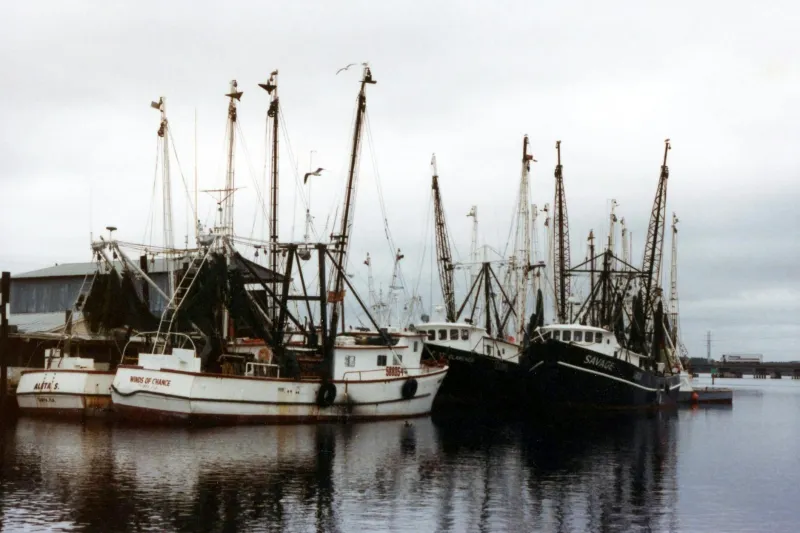
Boudreaux Thibodaux was having the worst day of his fishing career when he accidentally invented the future of frozen seafood. It was August 1967, and his ice truck had broken down somewhere between Houma and New Orleans with twenty pounds of Gulf shrimp slowly cooking in the Louisiana heat. Most fishermen would have called it a total loss and headed home. Thibodaux did something different.
He pulled into the nearest gas station, bought every bag of ice they had, and started selling shrimp directly from his cooler to anyone who would listen. By sunset, he'd sold everything—and made more money than he typically earned in three days on the water.
"I kept thinking about those people buying my shrimp," Thibodaux later recalled. "They were so happy to get it fresh, and they kept asking when I'd be back."
From Bayou to Boardroom
Thibodaux had been shrimping the Louisiana coast since he was fourteen, following the same patterns his father and grandfather had worked. He spoke a mix of Cajun French and English, had never taken a business class, and couldn't read a financial statement if his life depended on it. What he did understand was shrimp—when to catch them, how to keep them fresh, and most importantly, what customers actually wanted.
While major food companies were focused on mass production and shelf stability, Thibodaux was solving a different problem: how to get genuinely fresh Gulf seafood to people who lived hundreds of miles from the coast. His solution was elegantly simple—flash-freeze the shrimp on his boat using a jerry-rigged system he built from marine refrigeration parts and sell directly to grocery stores.
"The big companies, they were making shrimp that could sit on a shelf for months," said Marie Guidry, who managed purchasing for a regional grocery chain in the 1970s. "Boudreaux's shrimp tasted like you just pulled it out of the Gulf."
The Cooler That Changed Everything
The broken cooler that started Thibodaux's roadside sales became the template for his entire business model. Instead of selling to distributors who would mark up his product and delay delivery, he began driving directly to grocery stores throughout Louisiana and Mississippi. His pitch was always the same: taste the difference.
Store managers who had been buying frozen shrimp from national suppliers for years suddenly found themselves dealing with a soft-spoken Cajun fisherman who showed up at their loading dock with products that made their seafood counters smell like the Gulf Coast. Word spread quickly through the tight-knit community of regional grocers.
"Boudreaux would pull up in that old truck of his, and you could smell the ocean from the parking lot," remembered Tom Hebert, former manager of a Baton Rouge supermarket. "Customers started asking for his shrimp by name."
Building an Empire One Store at a Time
By the early 1970s, Thibodaux had stopped fishing entirely and was running a small fleet of refrigerated trucks throughout the Gulf South. He hired other local fishermen to supply his operation and began expanding beyond shrimp to include crawfish, oysters, and Gulf Coast fish. His company, Bayou Fresh Seafood, operated out of a converted warehouse in Houma and employed thirty people.
What made Thibodaux's operation unique wasn't just the quality of his product—it was his understanding of his market. While national food companies were trying to create one-size-fits-all products for grocery chains across the country, Thibodaux was building relationships with individual store managers who understood their local customers' preferences.
"He knew that people in Mississippi liked their crawfish prepared differently than people in Louisiana," said Dr. James Breaux, who studied regional food distribution patterns in the 1980s. "He was doing micro-targeting before anyone had a name for it."
The Wall Street Moment
Thibodaux's biggest test came in 1978 when Kroger, one of America's largest grocery chains, offered to buy his entire company. The deal would have made him wealthy overnight, but it also meant giving up control of the business he'd built from that broken cooler.
Instead of selling, Thibodaux negotiated a distribution agreement that allowed Bayou Fresh to maintain its independence while gaining access to Kroger's massive distribution network. It was a move that surprised industry analysts who expected the small Louisiana company to be absorbed by the grocery giant.
"Nobody thought a shrimp boat captain could negotiate with Kroger executives," said business journalist Sarah Melancon, who covered the deal for the Times-Picayune. "But Boudreaux understood something they didn't—his customers weren't buying frozen shrimp. They were buying a connection to the Gulf Coast."
Legacy in Every Freezer
By the time Thibodaux retired in 1995, Bayou Fresh Seafood was supplying grocery stores across fifteen states and generating over $50 million in annual revenue. The company had survived industry consolidation, economic downturns, and competition from much larger corporations by staying true to the principles Thibodaux had learned during that first roadside sale: know your product, understand your customers, and never compromise on quality.
Today, Bayou Fresh operates as a subsidiary of a national food company, but its products still carry Thibodaux's name and his commitment to Gulf Coast authenticity. More importantly, his approach to regional food distribution has been copied by dozens of other small producers who learned that sometimes the best way to compete with corporate giants is to offer something they can't replicate—a genuine connection to place and tradition.
In an industry built on efficiency and scale, Boudreaux Thibodaux proved that sometimes the most disruptive innovation comes from understanding what customers actually want, not what spreadsheets say they should want. His broken cooler became the foundation of an empire, but more than that, it became proof that the most powerful business insights often come from the people closest to the raw material—not the boardroom.