Among the Stones: The Gravedigger Who Sculpted His Way Into Art History
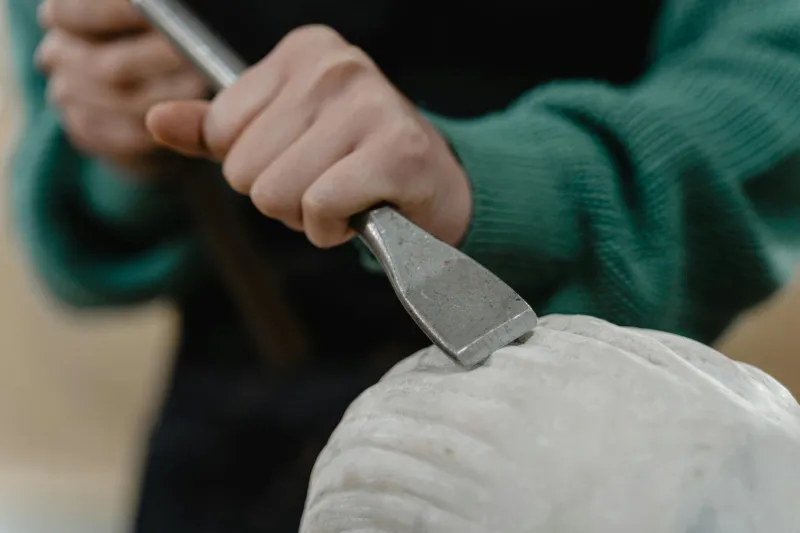
Among the Stones: The Gravedigger Who Sculpted His Way Into Art History
James was twenty-two when he took the job at Riverside Cemetery. The pay was steady, the work was necessary, and nobody asked too many questions about his lack of formal education or job prospects. He dug graves. He maintained the grounds. He cut grass between the headstones and helped families find their plots on gray afternoons.
It wasn't glamorous. It wasn't the kind of work that appeared in career guidance counselors' brochures. But it was, in ways James wouldn't fully understand until much later, the most intensive apprenticeship in sculpture a person could have received.
The Classroom of Quiet
Cemeteries are strange spaces—somewhere between park and monument, between nature and human intention. Riverside was particularly beautiful, built on a hillside with old oaks that had been there longer than the graves beneath them. Every stone marker was a lesson in form.
James began to notice things. The way a simple rectangular headstone could communicate dignity through proportion alone. How the angle of a carved cross caught light differently depending on the hour. The proportions that made some monuments feel massive while others, equally large, seemed to fade into the landscape. He noticed how different sculptors had solved the same problem—how to make absence visible, how to make stone speak for the person it marked.
He wasn't studying these things formally. There was no mentor, no studio, no art school curriculum. But there was time, repetition, and the kind of focused attention that comes from working in the same space day after day, season after season. James began to see the cemetery not as a place of death, but as a gallery of problem-solving.
During lunch breaks, he started sketching in a worn notebook. Not graves—not at first. But the headstones themselves. The way their surfaces caught shadow. The geometry of carved letters. The subtle variations that made one stone feel like a person and another feel like just a stone.
The First Chisel
After four years of digging and sketching, James found a broken marble piece in a salvage yard. It was nothing—a fragment of something larger, probably discarded because of a flaw or a mistake in cutting. He bought it for almost nothing and brought it home.
That first piece of stone sat in his apartment for months before he touched it with a chisel. He didn't have proper tools. He didn't have training. He didn't have any real sense of what he was doing. But he had seven years of watching stone, of understanding how it caught light, of seeing what different proportions communicated.
He carved a simple form—abstract, almost crude by professional standards. But something about it worked. The proportions felt right because his eye had been trained by thousands of hours spent in a cemetery, studying how stone related to space, how human intention translated into physical form.
James kept carving. He took night classes at a community college, but he found them limiting. The instructors wanted to teach him technique, and he already understood technique through observation. What he needed was permission to keep going, and that he gave himself.
The Pivot Nobody Predicted
He quit the cemetery job at twenty-nine. It was terrifying—he had no income, no safety net, no clear path forward. But he also knew something that most young artists never figure out: he understood his medium. He understood what stone could do because he'd spent years in its presence, studying its nature, learning its moods.
The first gallery show that took him seriously happened almost by accident. A local artist collective needed work for a group exhibition, and James submitted photographs of his pieces. The curator was struck by something she couldn't quite articulate—a maturity, a confidence, a sense that this person understood something essential about form and space.
That show led to commissions. The commissions led to gallery representation. By his early forties, James was being written about in art magazines, included in museum collections, teaching workshops to young sculptors who'd gone to prestigious art schools but didn't have what he had: the bone-deep understanding of his material.
The Unconventional Apprenticeship
What James's trajectory revealed was something that formal art education often misses: that apprenticeship doesn't require a master, that training doesn't need to happen in a studio, that some of the most important lessons are learned through proximity and attention rather than instruction.
He never studied the history of sculpture formally. But he'd walked through a cemetery daily for seven years, and cemeteries are outdoor museums of sculptural tradition. He never took drawing classes from a master. But he sketched thousands of headstones, training his eye to see proportion and form in ways that most art students only read about in textbooks.
The work he did in obscurity—the digging, the maintenance, the quiet observation—wasn't separate from his artistic development. It was the foundation of it. It was the real thing, the thing you can't learn in a classroom because it requires time, repetition, and the kind of focused attention that only comes from doing something daily, not because it's prestigious, but because it's work.
Today, when young sculptors ask James how he learned his craft, he tells them to spend time with stone. Not in a class. Not in a studio surrounded by other aspiring artists. Alone. Long enough that it becomes less like studying and more like listening.
The cemetery taught him that. Seven years of digging graves taught him more about form, proportion, and the weight of human intention than any MFA program could have. He just had to be patient enough to recognize the education that was happening all around him, waiting only for someone to pay attention.