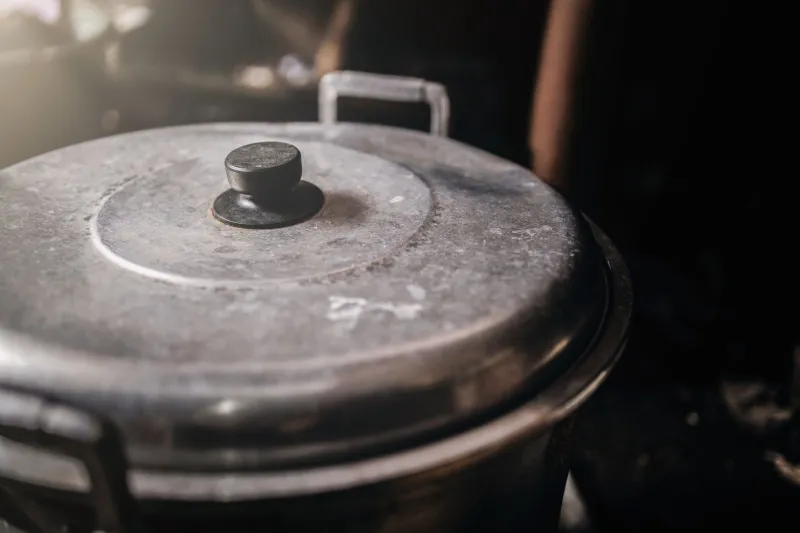
Grease, Gears, and a Paper Bag: How a Mill Town Delivery Boy Killed the Hand-Crank and Saved a Million Wrists
Most people who changed American life forever had a workshop, a university, or at least a backer with deep pockets. Charles Kettering had a canvas sack full of newspapers and a bicycle that squeaked.
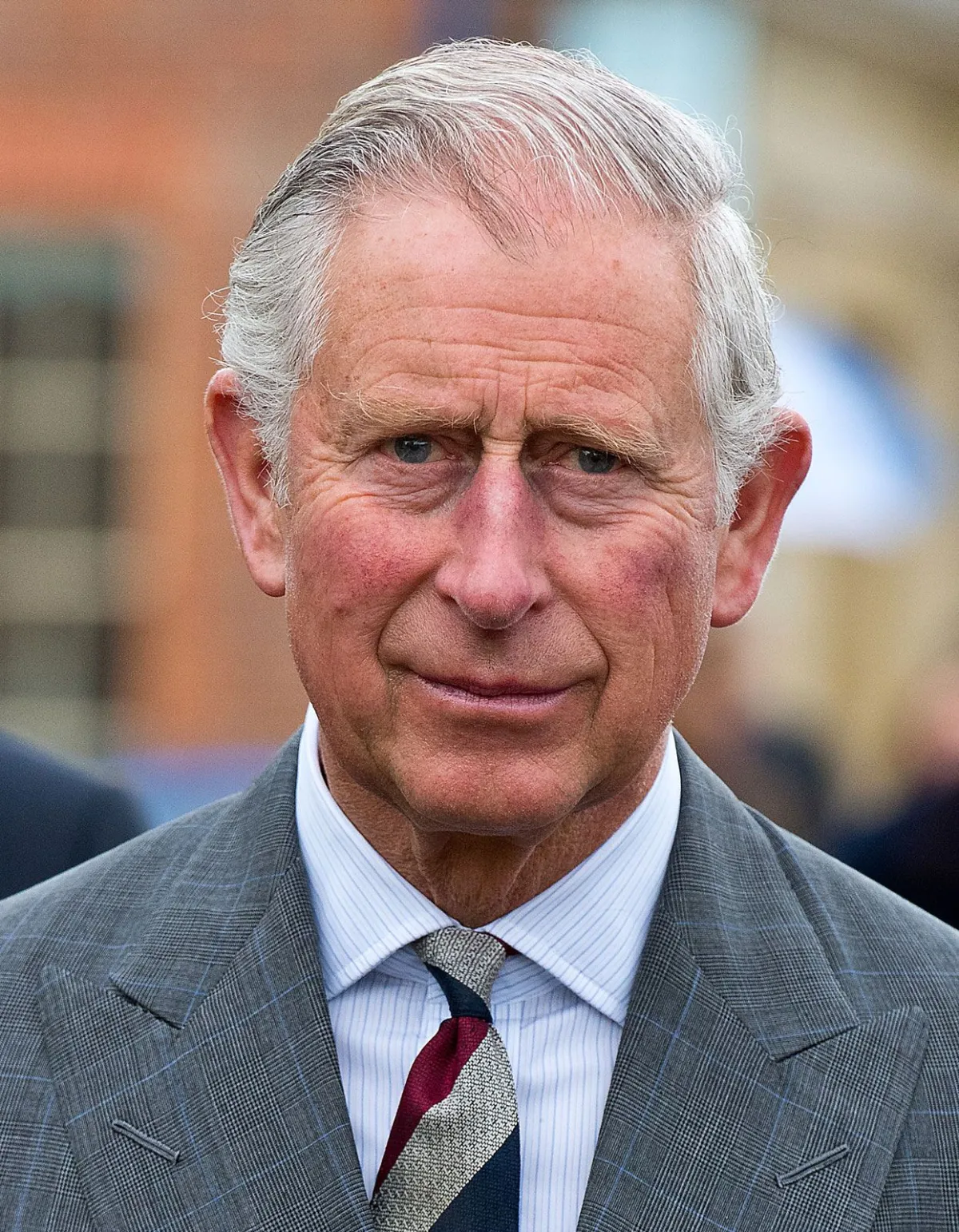 Photo: Charles Kettering, via cdn.britannica.com
That was enough.
Long before he held 186 patents, long before General Motors came calling, and long before the phrase "electric starter" meant anything to anyone, Kettering was just a kid from Loudonville, Ohio — a mill town that smelled of timber and river water — waking up before sunrise to make sure his neighbors got their morning paper. What he was also doing, without anyone assigning it or grading it, was building one of the most practical mechanical minds the country had ever produced.
 Photo: Loudonville, Ohio, via www.hotel-crocus.eu
The Route That Doubled as a Lab
Loudonville in the 1880s wasn't exactly a hotbed of technological ambition. But Kettering — born in 1876 on a farm outside town — had a habit that set him apart from every other kid slinging papers in the dark: he couldn't leave broken things alone. Discarded telegraph components, stripped-down alarm clocks, busted farm equipment left at the edge of properties on his route — all of it became raw material.
He'd collect pieces the way other boys collected baseball cards. By the time he finished his deliveries each morning, his pockets were often heavier with salvaged hardware than with undelivered change. Neighbors thought he was odd. His mother thought he was industrious. Both were right.
The paper route gave him something no classroom could have engineered on purpose: daily, repetitive contact with real machines in real conditions. He learned how cold affected metal. He noticed which door hinges failed in winter and which held. He understood, intuitively, that mechanical problems were rarely mysterious — they were just misunderstood.
Eyes That Kept Going Bad, Hands That Never Stopped
There's a detail in Kettering's early life that most history books gloss over, probably because it complicates the tidy inventor narrative. He had serious eye problems throughout his youth — painful enough that he had to temporarily leave school. For a kid who loved reading and learning, that was devastating.
But here's what happened instead of nothing: he kept working. He kept tinkering. When you can't read, you build. When you can't study diagrams, you handle the actual parts. His visual impairment, frustrating as it was, pushed him deeper into tactile understanding — the kind of knowledge that lives in your fingertips rather than your eyes.
By the time his vision stabilized enough for him to attend Ohio State University, Kettering arrived not as a blank slate waiting to be filled, but as someone who already knew things that professors were still trying to put into words. He graduated in electrical engineering in 1904, but the education that mattered most had already happened, one paper at a time, one salvaged coil at a time, on cold Ohio mornings.
 Photo: Ohio State University, via i.pinimg.com
The Problem Nobody Wanted to Solve
Here's something worth understanding about early automobiles: they were genuinely dangerous to start.
The hand crank — the mechanism used to fire up a car engine before the electric starter existed — required a driver to stand at the front of the vehicle and physically rotate a heavy metal crank with enough force to turn over the engine. If the engine backfired, which happened constantly, the crank could snap back with tremendous force. Broken thumbs were common. Broken wrists happened regularly. There are documented cases of men being killed by a backfiring crank.
Women, in many cases, simply couldn't generate enough torque to start a car at all. Which meant the automobile, supposedly the great democratizing machine of the early twentieth century, was largely inaccessible to half the population.
Kettering looked at this problem — which the automotive industry had essentially accepted as an unfortunate fact of life — and saw what his paper route had trained him to see: a mechanical problem with a solvable answer.
What the Delivery Boy Understood That the Engineers Missed
The breakthrough wasn't purely technical. It was philosophical.
Conventional wisdom at the time held that an electric motor powerful enough to turn over a car engine would have to be enormous — too heavy, too expensive, too impractical. The engineers who'd looked at the problem before Kettering had essentially concluded it couldn't be done at the scale required.
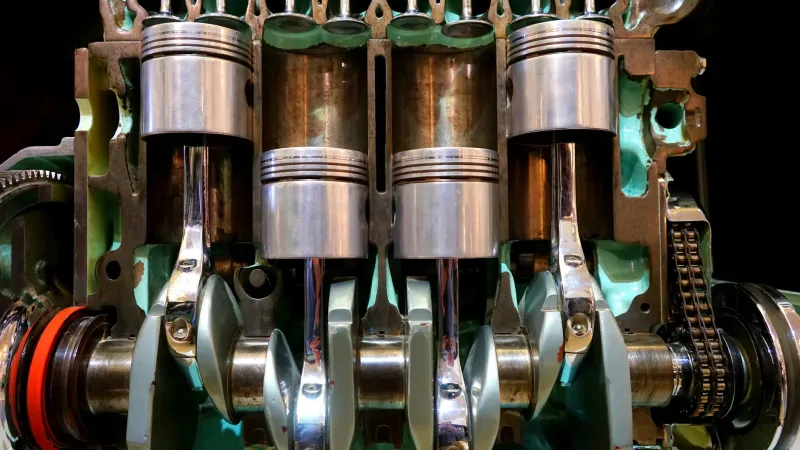
Kettering disagreed, and his reasoning came straight from those predawn hours on a bicycle. He'd spent years observing how brief, intense bursts of mechanical energy could accomplish things that sustained force could not. A hand crank didn't spin an engine continuously — it delivered a sharp, concentrated input. An electric motor, he reasoned, could do the same thing if you designed it to operate in short, powerful bursts rather than as a continuously running system.
He was right. Working at Dayton Engineering Laboratories Company — Delco, which he co-founded — Kettering developed an electric starter motor that was compact, reliable, and manufacturable at scale. Cadillac introduced it in the 1912 model year. Within a decade, the hand crank had gone from universal standard to curious relic.
More Than a Gadget
It's tempting to frame the electric starter as a convenience story — and it is that. But it's also a safety story, a gender equity story, and quietly, a story about who gets to participate in modern life.
Before 1912, driving was physically demanding in ways that excluded a significant portion of the population. After Kettering's starter motor became standard, the automobile became genuinely accessible to a much broader slice of America. Women began driving independently in far greater numbers. Older Americans who lacked the arm strength for a hand crank could now operate a vehicle. The injury toll from crank backfires essentially disappeared.
Kettering went on to develop leaded gasoline (a legacy that history has since complicated considerably), automotive paint processes, and early cancer research equipment. He remained prolific into old age, driven by the same restless curiosity that had him stuffing salvaged radio parts into his paper bag at age fourteen.
What the Route Actually Taught
The easy version of the Kettering story is a genius-emerges narrative — a brilliant mind that would have found its way regardless of circumstances. That version is probably wrong.
The paper route mattered. Not because delivering newspapers is inherently educational, but because it placed a curious, mechanically inclined kid in daily contact with the physical world — its textures, its failures, its rhythms — at an age when that kind of contact shapes how a person thinks permanently.
He didn't learn engineering from the route. He learned something harder to teach: that problems are approachable, that broken things are just things waiting to be understood, and that the gap between what exists and what could exist is almost always smaller than it looks from a distance.
The mill town didn't hold him back. It built him. One cold morning at a time.