
The Grocery Stock Boy Who Became Boxing's Heavyweight King
Rocky Marciano was stocking shelves at a Massachusetts grocery store and working construction when he decided to try amateur boxing at age 24. The same hands that arranged produce displays and mixed concrete would later deliver the knockout punch that made him the only undefeated heavyweight champion in boxing history.
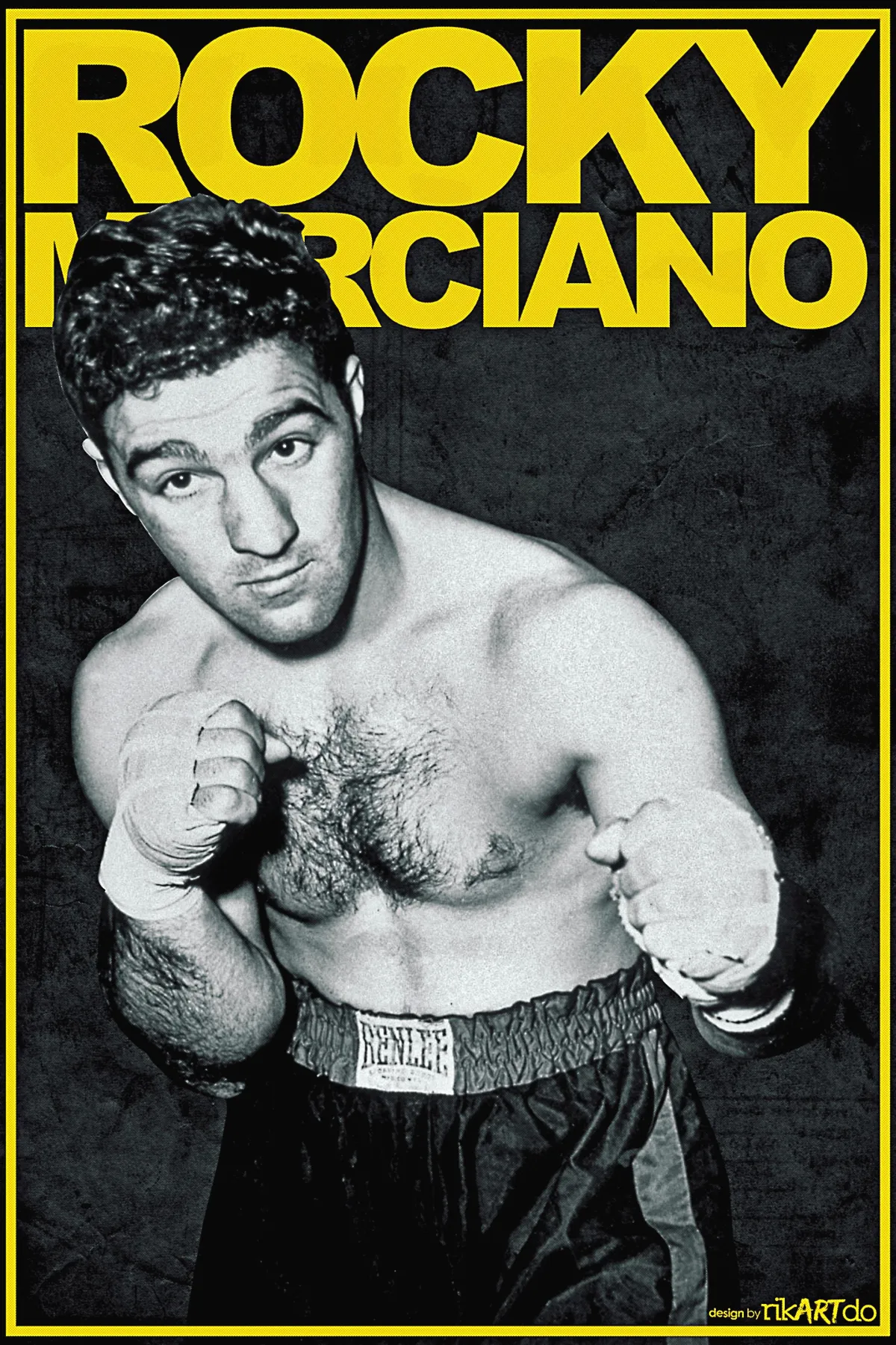 Photo: Rocky Marciano, via i.pinimg.com
Marciano's manager discovered him at a local gym, where Rocky was sparring to stay in shape between construction jobs. He'd never planned on professional boxing—he just needed the exercise. Six years later, he was standing over Jersey Joe Walcott, having knocked out the champion to claim the heavyweight title.
The remarkable part? Marciano kept his day job mentality throughout his career, treating boxing like shift work: show up, do the job, go home. No flashy lifestyle, no entourage—just a working-class guy who happened to hit harder than anyone else in the world.
The School Janitor Who Rewrote Basketball History
John Wooden was mopping floors and emptying trash cans at a high school in South Bend, Indiana, when he got his first coaching offer. The future "Wizard of Westwood" was working as a custodian to make ends meet while his wife taught school—both of them barely scraping by during the Great Depression.
Wooden's janitorial duties included cleaning the gym where he'd occasionally shoot baskets alone after hours. A school board member noticed his form and asked if he'd ever played competitively. That conversation led to a coaching position that would eventually produce ten NCAA championships at UCLA.
Decades later, Wooden would credit his custodial experience with teaching him humility and attention to detail—qualities that became the foundation of his legendary "Pyramid of Success." He never forgot that greatness often starts with a mop bucket and a willingness to do whatever work is available.
The Hotel Maid Who Sprinted to Olympic Gold
Wilma Rudolph was cleaning hotel rooms in Nashville when a track coach spotted her running to catch a bus. The future "fastest woman in the world" was working multiple jobs to support her family, including housekeeping at a downtown hotel where she scrubbed bathrooms and changed sheets for $1.25 an hour.
Rudolph had overcome polio as a child and walked with a leg brace until age 12. By 20, she was supporting herself with whatever work she could find. That chance encounter with the coach led to a spot on the Tennessee State University track team, then to the 1960 Olympics in Rome, where she won three gold medals and became the first American woman to accomplish that feat.
She later said the discipline required to clean dozens of hotel rooms each day—the repetitive precision, the attention to detail, the physical endurance—perfectly prepared her for the training regimen that made her Olympic history.
The Milkman Who Delivered Championships
Vince Lombardi was delivering milk door-to-door in Brooklyn when he got his first opportunity to coach high school football. The future NFL legend worked the early morning milk route to pay for law school, never imagining that his real calling was waiting on a football sideline.
Lombardi's milk delivery job taught him the importance of reliability—showing up every day, regardless of weather or circumstances. That work ethic became his coaching philosophy: consistent excellence through disciplined repetition. He'd wake at 3 AM to load the milk truck, finish his route by noon, then spend afternoons studying law.
When a local high school offered him a coaching position, Lombardi was torn between the security of his milk route and the uncertainty of athletics. He chose football and eventually transformed the Green Bay Packers into a dynasty. The trophy awarded to Super Bowl champions bears his name.
The Factory Worker Who Pitched Perfect Games
Cy Young was working in a woolen mill in Ohio, operating machinery for 12 hours a day, when a local baseball team offered him $40 a month to pitch on weekends. The future Hall of Famer had never considered professional baseball—he was just the guy with the strong arm who played in company leagues.
Young's factory job required precise timing and mechanical repetition—skills that translated perfectly to pitching. He developed his legendary control by throwing at targets during lunch breaks, using the same methodical approach he applied to operating textile machinery.
His 511 career wins remain untouchable in modern baseball, a record as durable as the work ethic he learned in that Ohio factory. The annual award for baseball's best pitcher bears his name, honoring a man who literally punched a time clock when he threw his first professional pitch.
The Bus Driver Who Drove to Basketball Immortality
Red Auerbach was driving a school bus in Washington, D.C., and coaching high school basketball on the side when the Boston Celtics offered him their head coaching job. The future architect of the NBA's greatest dynasty was earning $30 a week navigating D.C. traffic and dealing with unruly teenagers.
Auerbach's bus driving experience proved invaluable in professional basketball. Managing a bus full of high schoolers taught him crowd control, quick decision-making under pressure, and the importance of maintaining authority without losing your temper. Those skills served him well when he was managing NBA egos and building championship teams.
He coached the Celtics to nine championships in ten years, creating a dynasty that defined professional basketball. But he never forgot the lessons learned behind the wheel of that school bus: stay focused on the route, don't let passengers distract you from the destination, and always arrive on time.
The Night Watchman Who Watched His Way to Tennis Glory
Arthur Ashe was working as a night security guard at a Richmond tennis club, watching over the courts he wasn't allowed to play on during the day, when a coach offered to train him in secret. The future Wimbledon champion spent his nights walking the grounds of an all-white tennis club in segregated Virginia, dreaming of playing on courts he could only touch after dark.
Ashe's security job gave him unlimited access to tennis courts when no one was watching. He'd practice serves under moonlight and study the game by observing members during his rounds. The isolation of night security work also taught him the mental discipline that would later make him one of tennis's most strategic players.
He became the first Black man to win Wimbledon, the U.S. Open, and the Australian Open, breaking barriers that seemed as solid as the gates he'd guarded as a young man. His Hall of Fame career began with a flashlight and a set of keys, proving that sometimes the best view of greatness comes from the outside looking in.
The Common Thread
These seven legends share more than athletic achievement—they share the understanding that extraordinary careers often begin with ordinary work. Each discovered that the skills required for greatness—discipline, persistence, attention to detail, showing up regardless of circumstances—are the same skills required for any honest job.
Their day jobs didn't delay their greatness; they developed it. Every shelf stocked, floor mopped, route driven, and shift worked was preparation for the moment when opportunity would demand everything they had learned about showing up and doing the work.
In a culture that celebrates overnight success, these stories remind us that most overnight successes are actually decades in the making—built one shift, one paycheck, one small act of professional discipline at a time.